CHILDREN LEARNING AT THE EDGE OF THE WORLD

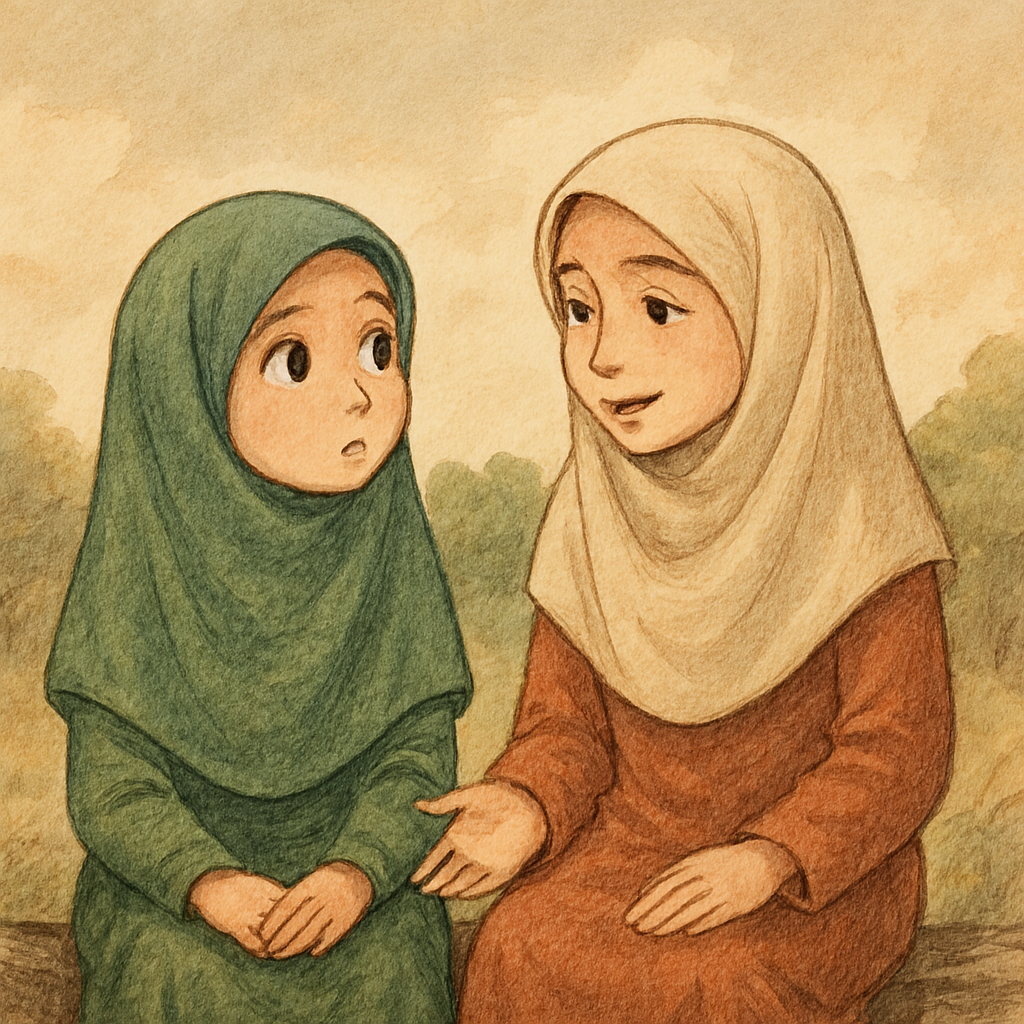
Illustration of Leni Marlina's Bilingual Collection: "Children Learning at the Edge of the World". Image source: Starcom Indonesia's cover No. 122.09022025 - LM
Leni Marlina’s Bilingual Poem: “CHILDREN LEARNING AT THE EDGE OF THE WORLD”
Poem by Leni Marlina
–
In many places,
schools stand like promises
spoken softly
and left to weather themselves.
Their roofs know rain
more intimately
than the names of the children beneath them.
Walls listen,
keeping voices no ledger ever learned to count.
Children arrive carrying distance.
Their footsteps are longer
than the sentences waiting in books.
They learn how to walk far
long before they learn how to choose.
Time inside the classroom
does not always move forward.
It drifts by seasons,
by hunger,
by lives that cannot afford to wait.
Books open to unfinished pages.
Stories break off mid-breath,
yet eyes continue reading—
for curiosity has never asked
for permission to survive.
Teachers come and go
like winds without addresses.
What remains are questions,
and a fragile trust
left to tend itself.
On the wall,
the world map hangs slightly askew.
Some places are too small to name.
Yet from those quiet dots
children look outward,
imagining themselves into the distance.
Empty desks multiply without sound.
Not every leaving earns a name.
Some departures are simply called
life arriving too early.
Numbers are written carefully,
as if everything could be measured.
Yet none record the courage
of showing up
when hope has grown thin.
Education, in these places,
is not dead.
It lives quietly
as the daily refusal
to surrender to fate.
And the children keep learning,
not to become remarkable,
but so that one day
they may choose their own lives
without apology.
This poem belongs to no single nation.
It lives wherever a child must travel far
for the right to imagine otherwise.
–
Australia & Indonesia, 2013
3
—–

About the Poet – Leni Marlina:
Leni Marlina, born in Baso, Agam Regency, West Sumatra, has resided in Padang since 2000. A poet, writer, and lecturer in the English Literature Program at Universitas Negeri Padang, she has served as a civil servant lecturer since 2006. Her recent works include the poetry collections “The Beloved Teachers” (2025) and “L-BEAUMANITY: Love, Beauty, and Humanity” (2025), alongside the trilogy English Stories for Literacy (2024–2025).
She has composed hundreds of unpublished poems during her Master of Arts in Writing and Literature (Children’s Literature, Literary Studies, & Creative Writing) in Australia (2011–2013), supported by an Indonesian government scholarship, and first published digitally since 2024 on media of Suaraanaknegerinews.com. and other digital platforms.
Beyond poetry, Leni writes short stories, essays, literary criticism, and reviews, and translates literary and journalistic works for both national and international platforms. Her work consistently positions language as a space for reflection, empathy, and the affirmation of human dignity.
She is also active in literary journalism, contributing to Suara Anak Negeri News and Negeri News, platforms dedicated to education, literacy, culture, and humanitarian values—“giving voice to those who cannot speak.”
Leni’s achievements have been recognized internationally. She received the Best Writer Award 2025 awarded by SatuPena West Sumatra at the 3rd International Minangkabau Literary Festival (IMLF-3), the ACC International Literary Prize 2025, and acknowledgment from The Rhythm of Vietnam (2025). Since 2025, she has served as Indonesia’s Poetry Ambassador for ACC SHILA, ASEAN Director for ACC SHILA Poets, and National Director (Indonesia) for the Panorama International Literary Festival (PILF) 2026 in India.
—-
Indonesian version
ANAK-ANAK YANG BELAJAR DI TEPI DUNIA
Puisi: Leni Marlina
–
Di banyak tempat,
sekolah berdiri seperti janji
yang diucapkan pelan
lalu dibiarkan menua sendiri.
Atapnya mengenal hujan
lebih baik
daripada nama murid-muridnya.
Dinding menyimpan suara
yang tak pernah dicatat.
Anak-anak datang membawa jarak.
Langkah mereka lebih panjang
daripada kalimat dalam buku.
Mereka belajar berjalan jauh
sebelum belajar memilih.
Waktu di ruang kelas
tidak selalu berdetak.
Ia bergerak menurut musim,
menurut perut,
menurut hidup
yang tidak sabar menunggu.
Buku-buku terbuka
pada halaman yang tak lengkap.
Cerita berhenti di tengah,
namun mata tetap membaca,
sebab rasa ingin tahu
tidak pernah meminta izin.
Guru datang dan pergi
seperti angin
yang tak mengenal alamat tetap.
Yang tinggal adalah pertanyaan
dan kepercayaan
yang harus dirawat sendiri.
Di dinding,
peta dunia menggantung miring.
Beberapa tempat terlalu kecil
untuk disebut.
Namun dari titik-titik itulah
anak-anak memandang jauh,
mencari diri
di antara kemungkinan.
Bangku kosong bertambah
tanpa suara.
Tidak semua perpisahan
punya nama.
Sebagian hanya disebut
hidup yang lebih dulu memanggil.
Angka-angka ditulis rapi,
seolah semua telah diukur.
Namun tak ada satu pun
yang mencatat keberanian
untuk tetap datang
ketika dunia tampak tertutup.
Pendidikan di tempat-tempat ini
tidak mati.
Ia hanya sering disalahpahami.
Ia bukan gedung,
bukan slogan,
melainkan usaha sunyi
untuk tidak menyerah pada nasib.
Dan anak-anak itu
tetap belajar
bukan agar menjadi luar biasa,
melainkan agar suatu hari
mereka bisa memilih
tanpa harus meminta maaf.
Puisi ini tidak milik satu negeri.
Ia hidup di mana pun
anak harus berjalan jauh
untuk sebuah kemungkinan.
Selama itu terjadi,
suara ini
akan selalu menemukan
waktunya sendiri.
–
Australia & Indonesia, 2013