A Visit to the Home of Malaysian Poets: An Inspiring Literary Encounter

By Sastri Bakry
Translated (Indonesian-English) by Leni Marlina
_
Whenever I travel abroad, my itinerary is almost always filled with tightly woven programs. For decades, I have carried cultural missions with the Sumbar Talenta group, and Malaysia has long felt like a second home—a place bound to us by shared language, familiar sensibilities, and intertwined histories. Our artistic and literary collaborations with numerous Malaysian organizations have always been warm, generous, and deeply rooted.
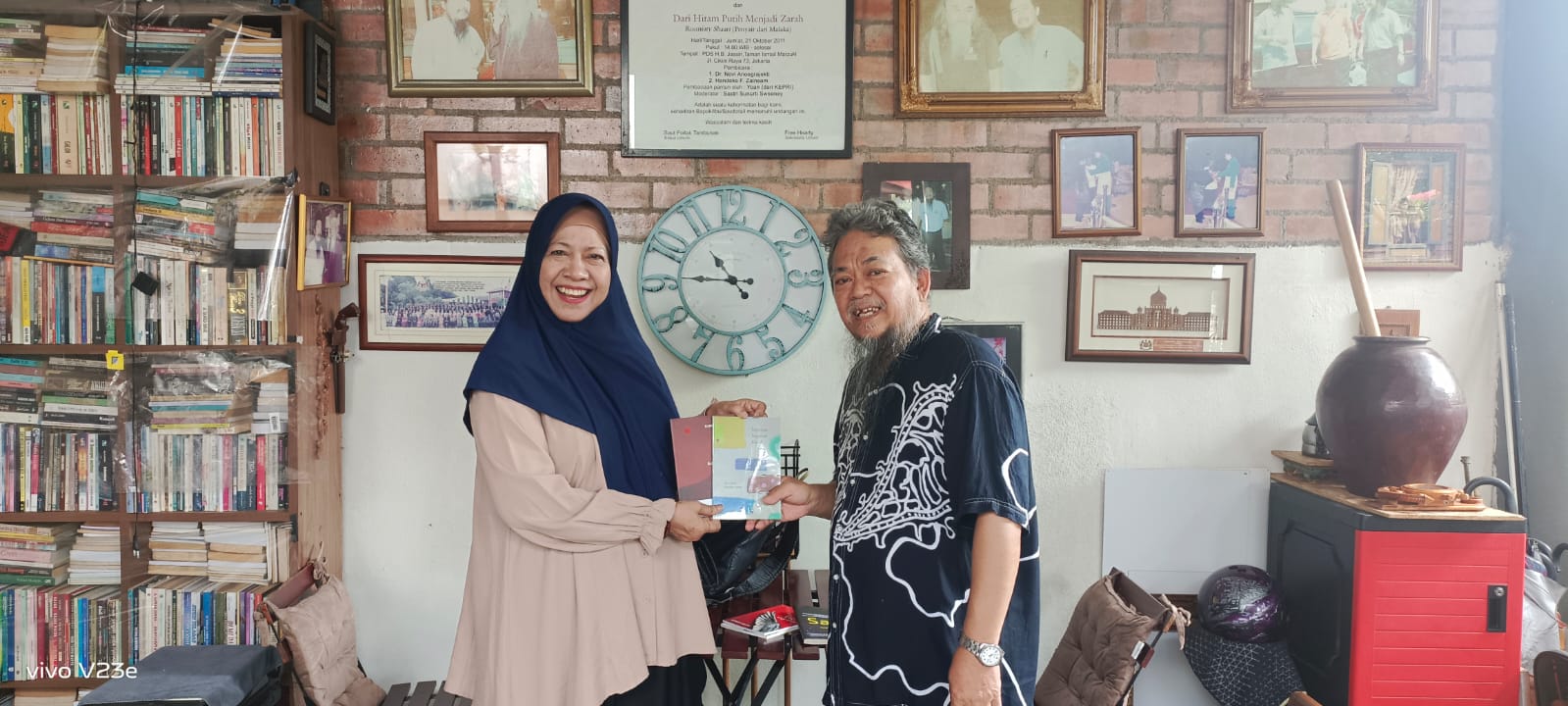
In late November 2025, I was invited by the Ministry of Tourism, Arts and Culture Malaysia through Hydramas Travel & Tours Sdn. Bhd. to join the Northern Peninsula Fam Trip. Held from 23 to 28 November, the entire program was fully sponsored. Five of us from SatuPena and Sumbar Talenta participated, exploring corners of northern Peninsular Malaysia that are seldom visited. Although my return ticket was scheduled for 28 November, I postponed my flight to 2 December. I wanted to finally visit two poets who had long invited me to their home: Djazlam Zainal and his wife, Rosmiaty Shaari. I often refer to them as a pair of literary doves—two souls whose lives, devotion, and artistry are inseparable from Malaysia’s poetic tradition.
Their home in Melaka is a sanctuary of serenity, warmth, and knowledge. This was my second time staying with them for several days. The terrace has transformed into a small but enchanting gallery of books—the kind the younger generation would describe as “Instagrammable.” We traded books, took photographs, and exchanged stories that lingered long after they were spoken. Their home felt like an oasis of words, filled not only with shelves of literary works and art pieces but also an extensive, immaculate collection of Malaysian–Indonesian music. Cassette tapes, CDs, and VCDs of legendary artists—P. Ramlee, Alfian, Lilis Suryani, Ernie Djohan, Bop Totopoli, Broery Marantika, and many others—lined their racks with a devotion that revealed both nostalgia and reverence.
What moved me most was not simply their mastery of poetry but the integrity with which they live. Rosmiaty teaches Qur’an reading three times a week to children in the neighborhood—completely free of charge, offered solely for the sake of Allah’s pleasure. The purity of this act touched me deeply. In both of them, poetry is not an ornament or an intellectual exercise—it is an ethic, lived quietly and consistently in daily life. The harmony between the beauty of their words and the sincerity of their conduct is rare, and profoundly inspiring.
Throughout our conversations, I became increasingly aware of how instrumental Djazlam has been in nurturing literary activities in Melaka. His position at the Ministry of Tourism, Arts and Culture enables him to bridge the worlds of literature, culture, and public institutions—something not easily achieved by most poets. Among the books he gifted me during this visit were Bulan di Racun Awan (2024) and Ingatan-Ingatan Kecil (2024), additions to his long list of works including Kilir-Kilir Makna, Ya, Bageh, Rasa Terpanggang, and Akar. Many of his poems have been translated into several languages, reflecting his quiet but enduring impact across literary borders.
Rosmiaty, equally prolific, possesses a poetic voice marked by spiritual depth and contemplative grace. Her works—Daun Nan Bercinta, Kembali Kepada Fitrah, Ketika Nur, Ketika Isyarat, and KEPADA…—are filled with reflection, devotion, and profound emotional resonance. She has received numerous awards, such as the World Poetry Numera Award, the Malaysia Premier Literary Award, and the Darul Ridzuan Literary Award. Beyond writing, she plays an active role in literary movements such as PULARA and collaborates frequently with Penama, Dewan Bahasa dan Pustaka, and JKKN Melaka, often organizing special programs for me and my colleagues from Sumbar Talenta. She is also a meticulous editor for several prominent Malaysian publishers.
This visit became far more than a literary encounter—it unfolded into a spiritual journey. I was reminded of the importance of sincerity, humility, and the power of literature to shape not only the mind but also the character. Staying in their home renewed my commitment to nurturing Teras Talenta, my reading house, and strengthened my resolve to continue writing with deeper passion and care. Malaysia, once again, taught me that literature is not merely something we compose; it is something we live.
I returned to Indonesia with a heart full of gratitude, carrying memories I will cherish for the rest of my literary life. My visit to the home of these two remarkable poets is an experience that will never fade.
—
About the Author: Sastri Bakry
Sastri Bakry is an Indonesian writer, poet, founder of Sumbar Talenta and Rumah Baca Teras Talenta. She currently serves as the Chairperson of SatuPena West Sumatra and CEO of the International Minangkabau Literacy Festival (IMLF).
The Indonesian version of the essay is available in the official link below:
Kunjungan ke Rumah Penyair Malaysia: Sebuah Pengalaman yang Menginspirasi
By Sastri Bakry
Translated (Indonesian-English) by Leni Marlina
_
Whenever I travel abroad, my itinerary is almost always filled with tightly woven programs. For decades, I have carried cultural missions with the Sumbar Talenta group, and Malaysia has long felt like a second home—a place bound to us by shared language, familiar sensibilities, and intertwined histories. Our artistic and literary collaborations with numerous Malaysian organizations have always been warm, generous, and deeply rooted.
In late November 2025, I was invited by the Ministry of Tourism, Arts and Culture Malaysia through Hydramas Travel & Tours Sdn. Bhd. to join the Northern Peninsula Fam Trip. Held from 23 to 28 November, the entire program was fully sponsored. Five of us from SatuPena and Sumbar Talenta participated, exploring corners of northern Peninsular Malaysia that are seldom visited. Although my return ticket was scheduled for 28 November, I postponed my flight to 2 December. I wanted to finally visit two poets who had long invited me to their home: Djazlam Zainal and his wife, Rosmiaty Shaari. I often refer to them as a pair of literary doves—two souls whose lives, devotion, and artistry are inseparable from Malaysia’s poetic tradition.
Their home in Melaka is a sanctuary of serenity, warmth, and knowledge. This was my second time staying with them for several days. The terrace has transformed into a small but enchanting gallery of books—the kind the younger generation would describe as “Instagrammable.” We traded books, took photographs, and exchanged stories that lingered long after they were spoken. Their home felt like an oasis of words, filled not only with shelves of literary works and art pieces but also an extensive, immaculate collection of Malaysian–Indonesian music. Cassette tapes, CDs, and VCDs of legendary artists—P. Ramlee, Alfian, Lilis Suryani, Ernie Djohan, Bop Totopoli, Broery Marantika, and many others—lined their racks with a devotion that revealed both nostalgia and reverence.
What moved me most was not simply their mastery of poetry but the integrity with which they live. Rosmiaty teaches Qur’an reading three times a week to children in the neighborhood—completely free of charge, offered solely for the sake of Allah’s pleasure. The purity of this act touched me deeply. In both of them, poetry is not an ornament or an intellectual exercise—it is an ethic, lived quietly and consistently in daily life. The harmony between the beauty of their words and the sincerity of their conduct is rare, and profoundly inspiring.
Throughout our conversations, I became increasingly aware of how instrumental Djazlam has been in nurturing literary activities in Melaka. His position at the Ministry of Tourism, Arts and Culture enables him to bridge the worlds of literature, culture, and public institutions—something not easily achieved by most poets. Among the books he gifted me during this visit were Bulan di Racun Awan (2024) and Ingatan-Ingatan Kecil (2024), additions to his long list of works including Kilir-Kilir Makna, Ya, Bageh, Rasa Terpanggang, and Akar. Many of his poems have been translated into several languages, reflecting his quiet but enduring impact across literary borders.
Rosmiaty, equally prolific, possesses a poetic voice marked by spiritual depth and contemplative grace. Her works—Daun Nan Bercinta, Kembali Kepada Fitrah, Ketika Nur, Ketika Isyarat, and KEPADA…—are filled with reflection, devotion, and profound emotional resonance. She has received numerous awards, such as the World Poetry Numera Award, the Malaysia Premier Literary Award, and the Darul Ridzuan Literary Award. Beyond writing, she plays an active role in literary movements such as PULARA and collaborates frequently with Penama, Dewan Bahasa dan Pustaka, and JKKN Melaka, often organizing special programs for me and my colleagues from Sumbar Talenta. She is also a meticulous editor for several prominent Malaysian publishers.
This visit became far more than a literary encounter—it unfolded into a spiritual journey. I was reminded of the importance of sincerity, humility, and the power of literature to shape not only the mind but also the character. Staying in their home renewed my commitment to nurturing Teras Talenta, my reading house, and strengthened my resolve to continue writing with deeper passion and care. Malaysia, once again, taught me that literature is not merely something we compose; it is something we live.
I returned to Indonesia with a heart full of gratitude, carrying memories I will cherish for the rest of my literary life. My visit to the home of these two remarkable poets is an experience that will never fade.
—
About the Author: Sastri Bakry
Sastri Bakry is an Indonesian writer, poet, founder of Sumbar Talenta and Rumah Baca Teras Talenta. She currently serves as the Chairperson of SatuPena West Sumatra and CEO of the International Minangkabau Literacy Festival (IMLF).
The Indonesian version of the essay is available in the official link below:
Kunjungan ke Rumah Penyair Malaysia: Sebuah Pengalaman yang Menginspirasi