CELEBRATING THE UNIVERSAL SPIRIT OF RENEWAL 2025: The VI International Teleconference of the Musical and Poetic Festival “Handshake of the Republics” 2025 in Russia
By Leni Marlina SAN (Suara Anak Negeri) Editorial
–
Suara Anak Negeri.com. JAKARTA – INDONESIA. A wave of creativity, cultural exchange, and universal human connection swept across the digital realm on January 22, 2025, as the VI International Teleconference of the Musical and Poetic Festival “Handshake of the Republics” in Russia came to life. Poets, writers, musicians, and cultural leaders from around the world gathered virtually, each bringing their unique voice to the conversation. In a time when the world often feels divided, the festival offered a refreshing reminder: art— whether in the form of poetry, music, or storytelling—can transcend borders and connect hearts.
Founded by Olga Levadnaya, the festival’s founder and artistic director, the “Handshake of the Republics” has become a beacon of hope, a shining example of how the arts can unite people and inspire meaningful change. The event, which started in 2017, has grown from a national gathering in Russia to an international phenomenon that continues to break down cultural barriers. This year’s teleconference marked another significant milestone, proving that art knows no boundaries and that the human spirit is stronger than ever, even in the face of adversity.
The festival’s primary mission is to bring together artists from different cultures and backgrounds to celebrate the power of words, music, and traditions. By exploring universal themes, the event transcends geographical borders, offering a chance to reflect on the shared human experiences that connect us all. As Rainer Maria Rilke, one of Europe’s greatest poets, once said, “The only journey is the one within.” This sentiment reflects the essence of the festival, where artists from around the world embark on a journey of self expression, cultural exchange, and renewal.
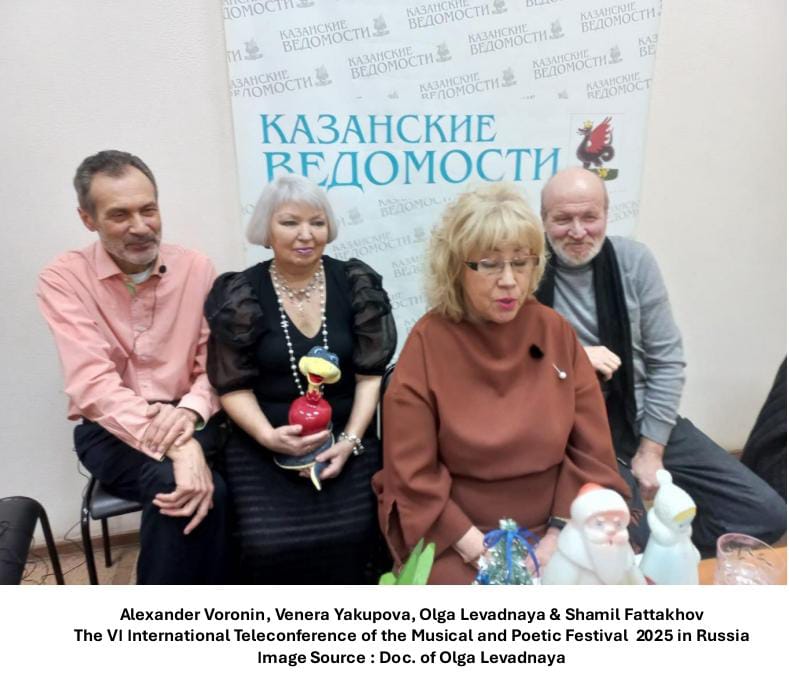
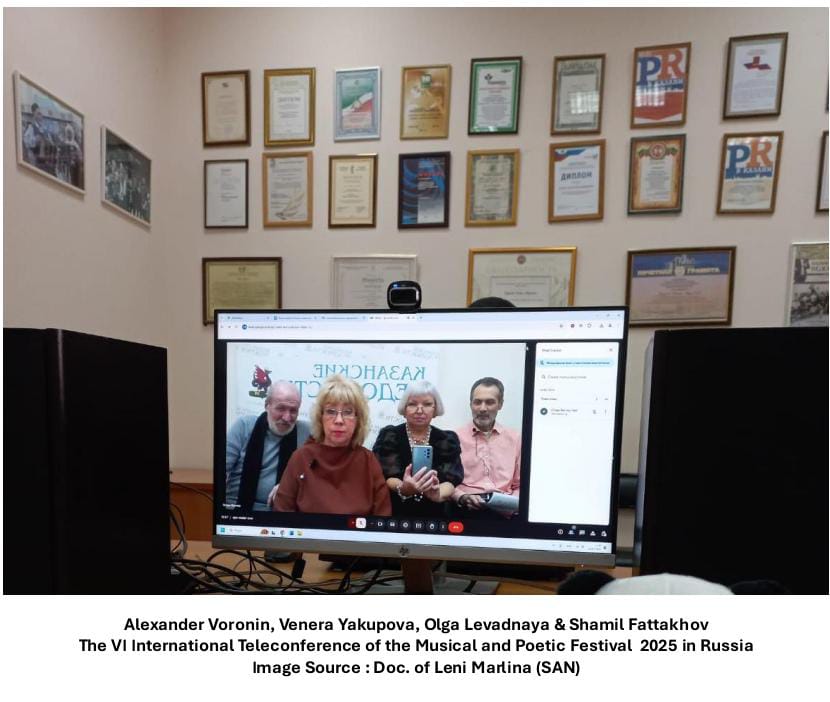
The moderators of the teleconference, who are always central to its success, include some of the most respected figures in Russian literature and culture:
Venera Yakupova, President of the Association of Publishers and Distributors of Print Products in Tatarstan and Editor-in-Chief of Kazanskie Vedomosti, whose tireless commitment to the world of publishing continues to inspire.
Olga Levadnaya, Artistic Director of the Kazan Poetry Theater “Dialog” and the founder of the “Handshake of the Republics” festival, whose passion for bringing people together through poetry and culture is the heart of this festival.
Alexander Voronin, Chair of the Kazan Branch of the Union of Russian Writers, whose dedication to the craft of writing and the promotion of Russian literature is unwavering.
Shamil Fattakhov, Journalist, Film and Television Director, and Translator, who brings a wealth of experience and creativity to the role of moderator.
- The Power of Art in Times of Change: The Vision Behind the Festival
The Musical and Poetic Festival “Handshake of the Republics” is not only a celebration of art, but a reflection of how culture can bridge divides and bring people together. As Olga Levadnaya, the founder and artistic director of the festival, emphasized in her opening remarks, “Art is a language that connects hearts beyond borders and boundaries. It is a tool that helps us communicate when words fall short.” These words resonate deeply within the context of the festival, as it brings artists from different corners of the world to explore themes of unity, culture, and renewal through the arts.
The festival, which first took shape in 2017, has grown to become a celebration of shared humanity. Every year, it brings together individuals who believe in the power of literature and creative expression to inspire change. Despite challenges such as the global pandemic, 3 which forced the festival to go virtual in 2020, its spirit remained resilient. The online edition, held in the same year, demonstrated the power of virtual spaces in uniting global voices.
As Mahatma Gandhi, one of the most influential thinkers of the 20th century, said, “Be the change that you wish to see in the world.” This festival exemplifies that very idea. It invites artists and poets to contribute their work to a greater cause—promoting unity, cultural understanding, and positive change through creative expression.
2. Breaking Boundaries: The Teleconference as a Cultural Bridge The magic of this year’s teleconference was not only in the performances and poetic expressions but also in the people.
Each participant, from the moderators to the poets, brought a unique perspective to the table, making this event more than just a collection of artistic performances—it became a living, breathing example of how collaboration can lead to transformative change.
Venera Yakupova, President of the Association of Publishers and Distributors of Print Products in Tatarstan, and the Editor-in-Chief of Kazanskie Vedomosti, played a key role as a moderator. She reflected on the importance of literature and the written word in shaping societies: “A book is a bridge that connects the wisdom of the past with the dreams of the future. When we read, we are not just consuming words; we are actively participating in a conversation with generations long gone and those yet to come.”
Venera’s words set the tone for a night of intellectual exploration and heart-stirring conversations. And yet, it was Olga Levadnaya, with her unrelenting passion for cultural exchange, who reminded us that art is the ultimate connector. As she noted, “In a world that can feel fragmented, the arts bring us together. They remind us that, at our core, we are all searching for the same thing: understanding, empathy, and a better world.”
The teleconference wasn’t just a passive exchange—it was an immersive experience. Through technology, poets and participants from across the globe interacted, shared stories, and created a new kind of digital space where cultural dialogue could flourish. As Alexander Voronin, Chair of the Kazan Branch of the Union of Russian Writers, expressed: “In this virtual room, there are no boundaries, no distance, only the power of words and the shared understanding that art is a universal language that connects us all.”
- A Global Dialogue: Poets, Writers, and Visionaries Unite
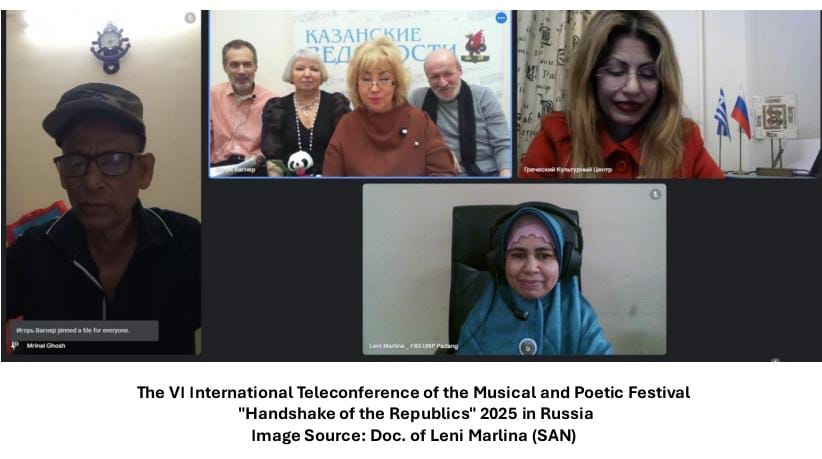
As the event unfolded, each participant brought their own culture, traditions, and artistic style to the virtual stage. Their words, thoughts, and performances wove a tapestry of human connection that was both intimate and global. The theme of the year—“Traditions and Customs of New Year Celebrations in Different Countries”—served as a perfect backdrop for the participants to explore the shared human experience of renewal and transformation.
One of the festival’s returning voices was Noel Lorentz, a poet and publisher from India. His poetry, steeped in the rich tradition of Indian culture, speaks of renewal, resilience, and the eternal cycle of life. As Noel passionately shared, “In India, the New Year is a symbol of the eternal renewal of life. It is a time to reconnect with our roots, with our families, and with the earth that sustains us.”
Noel’s words were complemented by Mrinall Kanti Ghosh, an Indian poet and musician whose work blends the power of music with the rhythm of words. In his poetic musical fusion, he reflected on how the New Year represents a universal yearning for connection, peace, and transformation. In his own words, “Music and poetry are two faces of the same coin. They both speak to the heart, transcending the barriers of language and culture.” His performance became a powerful reminder of the unifying power of artistic expression.
Chris Chen, a Chinese poet and journalist living in New Zealand, was supposed to speak passionately about the role of New Year celebrations in creating intergenerational bonds. Her thoughts echoed the wisdom of Confucius, who once said, “The strength of a nation derives from the integrity of the home.” Chris emphasized that the New Year is not just a celebration of time passing, but a way to honor our ancestors, our families, and our heritage.
The inclusion of new voices this year further enriched the event, bringing fresh perspectives and unique cultural insights. Anna Keiko, the President of ACC Shanghai Huingfey International Literary Association, a Chinese poet, prose writer, and artist, has shared her video helped by the committee and she was supposed to share her thoughts on the intersections of art, culture, and identity. As Wang Wei, a famous poet from the Tang dynasty, once said, “The beauty of the world lies in its impermanence. We must cherish every moment.” Anna’s video and poetry beautifully reflected this sentiment, exploring the fleeting nature of time and the eternal beauty of tradition.
In an equally powerful performance, Muhammad Rahal, an Algerian academic and artist, was supposed to share his thoughts on the diverse ways New Year is celebrated in Algeria. His words highlighted the importance of tradition in shaping contemporary life. As Albert Camus, the Algerian philosopher, once wrote, “In the depth of winter, I finally learned that within me there lay an invincible summer.” Rahal’s reflections on the resilience of culture and identity spoke to this timeless truth, reminding us that the heart of a culture can never be extinguished, no matter the trials it faces.
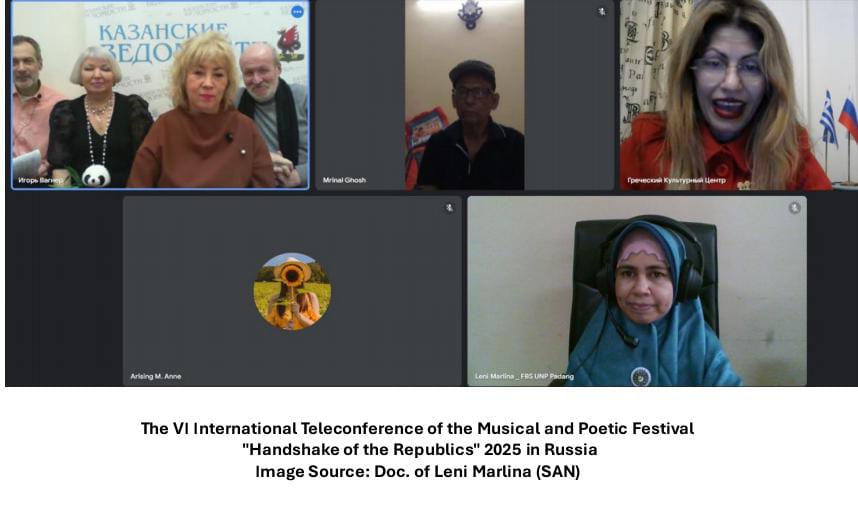
Leni Marlina, an Indonesian poet, writer, journalist, and advocate for literacy, brought a unique perspective to the festival. She shared insights into the Indonesian New Year celebrations, which are a blend of family, spirituality, and community. Reflecting on the significance of tradition in shaping modern life, Leni quoted the renowned Muslim philosopher Rumi: “Don’t grieve. Anything you lose comes round in new form.” This powerful statement resonates deeply with Leni’s work, which combines the celebration of tradition with a call for change. As an advocate for literacy and the transformative power of the written word, Leni bridges the past and present, using poetry to encourage reflection and inspire action for a better, more informed future. Her video about general modern celebrating new year 2025 in Indonesia can be seen in her own YouTube Channel (Leni Marlina _ FBS UNP Padang): https://youtu.be/X0qMVifA-Lg?si=Leq7PK-nJqUmmZre. The special poem which she has written and read for the closing program is entitled “Twilight’s End and the Dawn of a New Year” can be found on Indonesian online media Suara Anak Negeri.com, which can be accessed fully on the trusted link: https://suaraanaknegerinews.com/twilights-end-and-the-dawn-of-a-new-year-poems collection-by-leni-marlina-ppipm-indonesia/. 6 Lastly, Theodora Yannitsi, the director of the Greek Cultural Center in Moscow, spoke about the traditions surrounding the Greek New Year. She echoed the words of Nikolaos Kazantzakis, the Greek philosopher and author, who once said, “The world is not in a perfect state, and this is the reason why we must struggle to make it better.” Theodora’s work is an embodiment of this struggle, using culture to preserve and celebrate the past while shaping a brighter future.
Lastly, Theodora Yannitsi, the director of the Greek Cultural Center in Moscow, spoke about the traditions surrounding the Greek New Year. She echoed the words of Nikolaos Kazantzakis, the Greek philosopher and author, who once said, “The world is not in a perfect state, and this is the reason why we must struggle to make it better.” Theodora’s work is an embodiment of this struggle, using culture to preserve and celebrate the past while shaping a brighter future.
- The Inspirations and Motivations That Participants Can Bring Back to Their Home Countries from the Teleconference
As the VI International Teleconference of the Musical and Poetic Festival “Handshake of the Republics” concluded, participants were left with a profound sense of shared purpose and artistic inspiration. The festival, with its vibrant display of cultural diversity and artistic expression, provided an opportunity not just for individual performances, but for a collective experience that would leave lasting imprints on the hearts and minds of the participants. Below are some key inspirations and motivations that the participants could carry back to their respective home countries, drawn from the conversations, artistic exchanges, and cultural dialogue that transpired during the event.
- The Power of Unity Through Art One of the most significant lessons imparted by the teleconference was the power of art to unite people, even across vast geographical distances. In a world increasingly divided by political, cultural, and social tensions, the festival served as a reminder that art transcends these barriers. Participants were inspired to return to their home countries with a renewed commitment to fostering unity through creative expression. Whether it be through poetry, music, or visual arts, the idea that art is a universal language capable of bridging divides was an overwhelming theme. As artists and poets from different nations shared their work, it became clear that these forms of creative expression can foster deeper empathy, understanding, and solidarity across cultures. This inspiration could prompt individuals to create or participate in art-based projects that unite their communities, especially in areas where tensions or divisions exist.
- Cultural Exchange as a Catalyst for Personal Growth The festival also emphasized the value of cultural exchange as a tool for personal and societal growth. As Olga Levadnaya eloquently expressed, “Art connects hearts beyond borders,” this concept resonated deeply with the participants. Through engaging with peers from different cultural backgrounds, participants were not only exposed to diverse traditions but also offered a chance for introspection and self-growth. The process of sharing one’s own traditions while learning from others is a powerful catalyst for deepening one’s own cultural identity. Many participants left the event with an increased appreciation for the beauty in their own cultural practices and a renewed drive to preserve and promote them at home. For instance, writers and poets may be motivated to incorporate elements from other cultures into their own work, blending diverse influences in a way that enriches their artistic output and broadens their audiences’ perspectives.
- Empathy and Global Solidarity Empathy, perhaps more than anything else, was at the core of the teleconference. The poignant readings, musical performances, and discussions that took place fostered a sense of global solidarity—an understanding that, despite differences in culture, language, and geography, human experiences are often deeply shared. Participants were moved by the stories of resilience and hope shared by their fellow artists, from the renewal symbolized by New Year celebrations in India to the philosophical reflections on identity from Algerian and Greek scholars. Such exchanges not only broadened participants’ emotional and intellectual horizons but also reminded them of the universal human struggle for peace, justice, and prosperity. Motivated by these insights, artists and activists could be inspired to engage in social causes at home, working toward a world where empathy and mutual respect are prioritized over division.
- Revitalizing Local Traditions and Heritage The theme of renewal, present in much of the poetry and music shared during the festival, inspired many to reconsider their own cultural traditions and practices. The New Year celebrations explored during the festival were seen not merely as rituals of time passing but as opportunities to reconnect with roots and heritage. In a world increasingly consumed by globalization and modernity, the festival’s emphasis on the importance of tradition was a wake-up call for participants to protect and celebrate their cultural heritage. In the face of rapid technological advancement and cultural homogenization, there was a shared sense of urgency to preserve unique cultural practices and integrate them into the contemporary artistic landscape. For many participants, this meant returning to their home countries with a renewed sense of pride in their own culture, ready to share the value of their traditions with others in creative ways. Whether it was through cultural festivals, workshops, or local community events, participants felt inspired to act as ambassadors for their heritage, ensuring that it remains relevant and vibrant for future generations.
- Building Bridges with Literature and Music The conversations and performances during the festival reaffirmed the idea that literature and music are not just creative outlets but also powerful tools for social change. In the words of Shamil Fattakhov, one of the moderators, “Poetry and music transcend the physicality of borders; they speak to the heart and soul, engaging people in ways that no political speech or diplomatic agreement can.” Many participants were particularly struck by how literature and music have been used throughout history as forms of resistance and expressions of hope during times of oppression. Inspired by this, they were motivated to explore how literature and music could be used as tools for social transformation in their own countries. Whether through writing pieces that address societal issues or organizing musical performances that promote social causes, many left the teleconference with a deep desire to use their art as a platform for activism, helping to address injustices in their societies and giving voice to marginalized communities.
- Renewed Commitment to Global Collaboration One of the most practical outcomes of the teleconference was the establishment of international networks and collaborations. Poets, writers, musicians, and artists from all corners of the globe exchanged contact information and discussed ideas for future collaborations. Inspired by the success of the virtual platform, many participants left the event with a sense of empowerment to continue working on collaborative international projects that promote unity, culture, and mutual understanding. This could involve joint publications, co-hosted cultural festivals, or online platforms where artists from different countries can share their work with a global audience. The sense of 9 community formed during the teleconference was palpable, and many participants are eager to continue their cross-cultural collaborations beyond the virtual space. The motivation to build partnerships and work together across national boundaries is an important takeaway for all involved, ensuring that the spirit of the “Handshake of the Republics” continues well after the event.
- Renewal as a Source of Inspiration At the heart of this year’s teleconference was the theme of renewal, a concept that resonated deeply with all the participants. As each country celebrated its unique traditions, what emerged was a common belief in the cyclical nature of life, transformation, and rebirth. For many, the festival was a chance to reflect on their personal and professional lives and how they could embark on their own journeys of renewal. Whether it was a reawakening of artistic practices, a commitment to social causes, or a deepened desire to cultivate spiritual well-being, participants left with a strong sense of motivation to embrace change. This spirit of renewal is something that can be applied to all areas of life, inspiring individuals to engage in self-reflection, pursue personal growth, and contribute meaningfully to their communities.
Conclusion
The VI International Teleconference of the Musical and Poetic Festival 2025 “Handshake of the Republics” was more than a series of performances and discussions; it was a transformative experience that offered artists and participants new perspectives, deepened connections, and practical tools for effecting change in their home countries. Through the shared experience of art, literature, and music, participants were inspired to bring back to their communities a spirit of unity, empathy, and cultural pride, while also working toward a future built on mutual understanding and global solidarity. The lessons learned at the teleconference will continue to echo in their work, motivating them to be active participants in the collective effort to make the world a better place through the power of art. The teleconference concluded with a collective realization: the VI International Teleconference 2025 was more than just an event. It was a manifestation of the collective human spirit, united by a common desire for understanding, empathy, and transformation. Through poetry, music, and storytelling, the participants gave voice to a universal vision—a world where art can heal, unite, and inspire change.
As Walt Whitman once said, “Keep your face always toward the sunshine—and shadows will fall behind you.” The teleconference was a shining example of how, even in the face of darkness, the light of creativity, culture, and human connection can lead the way. As this global gathering of artists and poets showed, art is not just an expression—it is a revolution. And in a world in need of healing, these artists, poets and cultural leaders are leading the charge.
———————-
[LM, Editorial Board of Suara Anak Negeri.com, Assisted by AI] Indonesian Journalist, chronicling the power of art and culture to bridge divides and inspire change.