Democracy at a Crossroads: Between Popular Sovereignty and the Threat of Oligarchy
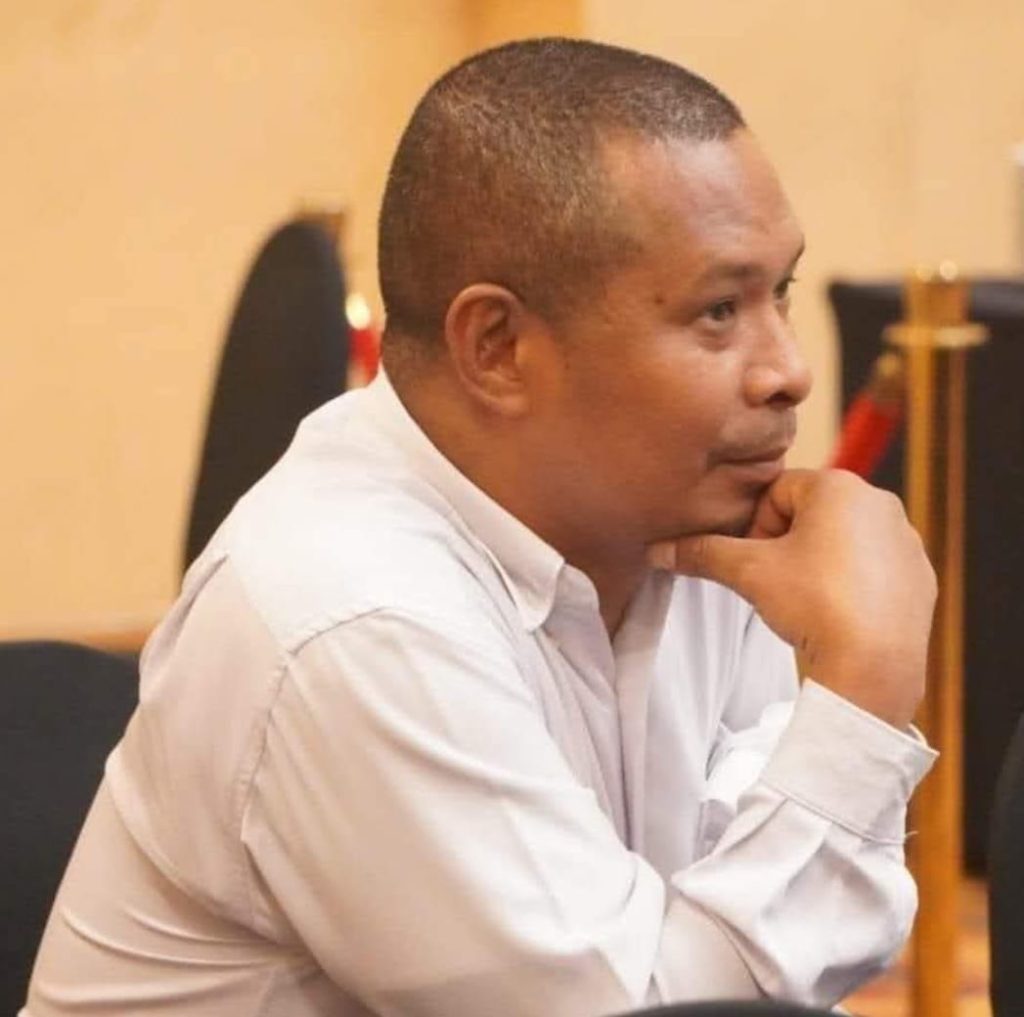
By Herkulaus Mety, S.Fils, M.Pd
(Alumnus STF Seminari Pineleng dan IAIN Manado)
Translated (Indonesian-English) by Leni Marlina
==============
Direct political participation creates a sense of ownership over the political process. Electoral participation cultivates civic consciousness and strengthens social cohesion. When citizens vote, they do not merely select leaders; they affirm their place as moral agents within the polity.
If the election of regional heads and the president were to be returned to the DPRD or the national parliament (DPR RI), a serious risk of political alienation would emerge. Citizens may feel excluded from decisions that determine their collective destiny. Over time, this exclusion would likely erode public trust in democratic institutions and deepen political apathy. Robert Putnam (2000) demonstrates that declining civic participation correlates strongly with the erosion of social capital and the weakening of democratic quality.
By contrast, direct elections foster public political education. Although often criticized as “noisy,” contentious, and costly, such processes compel citizens to deliberate, debate, and evaluate candidates. Democracy is never tidy; yet participatory disorder is frequently healthier than authoritarian order. The vitality of democracy lies not in procedural elegance, but in inclusive engagement.
Oligarchy, Political Parties, and the Separation of Powers
Politically, the core issue resides in the relationship between oligarchy, political parties, and state institutions. Jeffrey Winters (2011) characterizes Indonesia as an oligarchic democracy, in which vast wealth is systematically converted into political influence.
Within an indirect electoral scheme conducted by the DPRD or DPR RI, oligarchic power would find its most strategic arena. There would be little need to persuade the public; securing party elites and legislators would suffice. Such a system risks undermining Montesquieu’s principle of trias politica (1748/1989), as executives produced through legislative transactions would struggle to exercise genuine checks and balances. Presidents or regional heads would emerge indebted to parliamentary elites, transforming power relations into transactional bargains rather than constitutional accountability.
Direct elections do not automatically dismantle oligarchic influence, but they at least broaden the arena of contestation. Candidates must cultivate public legitimacy, not merely elite endorsement. In this context, party cadre development becomes crucial. Political parties should function as schools of democracy, not merely electoral vehicles. Without strong internal regeneration, even direct elections risk producing shallow populism or instant political figures devoid of institutional grounding.
Moreover, leaders elected directly tend to internalize a psychological mandate from the people, rather than a mandate bestowed by elites. This perceived legitimacy matters profoundly when leaders must take difficult, even unpopular, decisions in pursuit of long-term public interest.
Political Costs and Corruption as Investment
One of the most frequently cited arguments in favor of indirect elections is cost efficiency. Direct elections are often deemed expensive. However, economic analysis must account for the hidden costs embedded within indirect systems.
If parliamentary elections encourage bribery and transactional politics, the economic costs become far greater: policy corruption, problematic infrastructure projects, budget leakage, and market distortion. Corruption is not merely a moral failure; it is a macroeconomic problem. It discourages investment, degrades public services, and widens inequality (World Bank, 2000).
While direct elections entail substantial upfront costs, they can be understood as a democratic investment. Electoral spending functions as a mechanism of accountability. Conversely, systems that appear procedurally cheap but generate structurally expensive corruption represent an economically irrational choice.
Weighing the Two Electoral Models
1. Election by DPRD / DPR RI
This model may offer administrative efficiency and short-term political stability. Yet its risks are substantial: concentration of power among narrow elites, heightened vulnerability to money politics and oligarchic transactions, weakened public legitimacy, and corruption as a mechanism of “return on investment.”
Philosophically, ethically, socially, politically, juridically, anthropologically, psychologically, and economically, this model produces more harm than benefit within Indonesia’s current context.
2. Direct Elections with Institutional Strengthening
Direct elections for both regional heads and the presidency align more closely with the principle of popular sovereignty. However, they must be accompanied by:
* robust party cadre development to ensure qualified leadership,
* firm law enforcement against vote-buying and political finance violations,
* sustained civic and political education,
* strengthened electoral oversight bodies and judicial institutions.
Here, the classical principle salus populi suprema lex esto the welfare of the people shall be the supreme law regains its relevance. Electoral systems must be evaluated not merely procedurally, but by the extent to which they safeguard public interest and prevent collective harm.
Conclusion: Democracy as a Moral Project
Debates over electoral mechanisms are not merely technical disputes; they are tests of our commitment to democracy as a moral and civilizational project. Indonesia may choose a shortcut—transferring power to elites in the name of superficial efficiency. Yet history teaches that shortcuts in democracy often lead to the dead end of authoritarianism.
Direct elections are imperfect, but they preserve space for correction, participation, and hope. Our task is not to abandon democracy because of its flaws, but to repair it through party reform, rule of law, and political education. Therein lies our ethical responsibility as citizens: to ensure that democracy is not captured by oligarchy, and that power remains aligned with the people rather than with capital. (*)
—
References
Bandura, A. (1997). Self-efficacy: The Exercise of Control. Freeman.
Dahl, R. A. (1989). Democracy and Its Critics. Yale University Press.
Locke, J. (1980). Second Treatise of Government (C. B. Macpherson, Ed.). Hackett. (Original work published 1689)
Montesquieu. (1989). The Spirit of the Laws (A. M. Cohler, B. C. Miller, & H. S. Stone, Trans.). Cambridge University Press. (Original work published 1748)
Plato. (2007). The Republic (D. Lee, Trans.). Penguin Classics.
Putnam, R. D. (2000). Bowling Alone: The Collapse and Revival of American Community. Simon & Schuster.
Radbruch, G. (2006). Legal Philosophy (K. Wilk, Trans.). Oxford University Press. (Key ideas developed in 1946)
Rousseau, J.-J. (2012). The Social Contract (C. Betts, Trans.). Oxford University Press. (Original work published 1762)
Winters, J. A. (2011). Oligarchy. Cambridge University Press.
World Bank. (2000). Anticorruption in Transition: A Contribution to the Policy Debate. World Bank.
—-
The Indonesian version of the essay above is available in the official link below:
Demokrasi di Persimpangan: Antara Kedaulatan Rakyat dan Ancaman Oligarki