When Sovereignty Is No Longer Secure
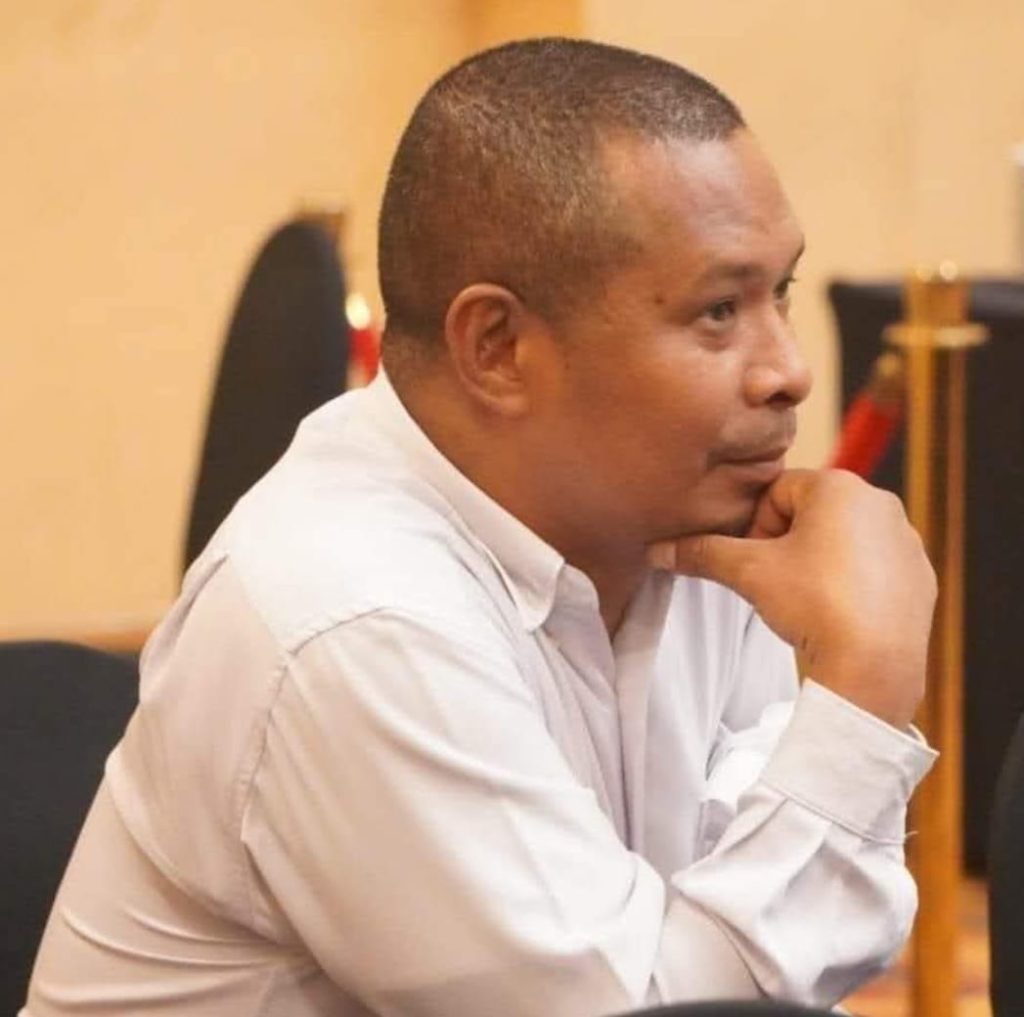
By Herkulaus Mety, S.Fils., M.Pd. | Alumnus of STF Pineleng Seminary and IAIN Manado
Translated (Indonesian-English) by Leni Marlina
_
When sovereignty is no longer secure, the world is moving in a dangerous direction. The arrest of Venezuelan President Nicolás Maduro by the United States in early January 2026 marks a new chapter in global politics, a chapter in which a sovereign head of state can be unilaterally apprehended by a foreign power and transferred to another country’s jurisdiction without the mandate of any international institution. This event is not merely a bilateral dispute; it is a stark warning about the fragility of international law, the blurring of sovereign boundaries, and the growing dominance of power politics in the contemporary global order.
On 3 January 2026, Nicolás Maduro was arrested by United States forces in an operation carried out in Caracas. He was subsequently flown to the United States and brought before a federal court in New York on multiple criminal charges, including allegations of narco-terrorism and transnational criminal conspiracy. The U.S. government framed the action as law enforcement based on long-standing indictments, while the Venezuelan government supported by Russia and China condemned it as a grave violation of state sovereignty and international law. The United Nations Security Council quickly became the arena for intense debate over the legality and precedent set by this act.
This is not merely a legal or security incident. It is a geopolitical precedent. If a president can be unilaterally arrested by another state without a legitimate multilateral mechanism, then there is no longer any guarantee that the principle of sovereignty long the foundation of relations among states will remain protected.
State Sovereignty in a Fractured World
Since the emergence of the modern state, sovereignty has been understood as the supreme authority of a state over its territory and people. Jean Bodin defined sovereignty as absolute and indivisible power, while Thomas Hobbes regarded it as the essential condition for political order and security (Bodin, 1576/1992; Hobbes, 1651/1998). This principle was later institutionalized in international law through the United Nations Charter, which affirms the sovereign equality of states and the prohibition of intervention.
Yet contemporary global realities reveal an ever-widening gap between norm and practice. Sovereignty is increasingly negotiated through power. Powerful states interpret international law elastically strictly when applied to weaker states, permissively when it concerns allies. In this context, sovereignty does not collapse dramatically; it erodes gradually under political, economic, and military pressure.
Venezuela exemplifies how sovereignty can be systematically hollowed out. Years of economic sanctions, diplomatic isolation, and political delegitimization have now culminated in the arrest of a sitting head of state. What remains is no longer substantive sovereignty, but a fragile symbol.
The United States and the Paradox of Global Law Enforcement
The United States frequently presents itself as the guardian of a rules-based international order. Yet the arrest of Nicolás Maduro raises a fundamental question: whose rules are being enforced, and by whom? When a single state acts simultaneously as accuser, enforcer, and executioner without international authorization, law is transformed into an instrument of power.
Francis Fukuyama, once famous for proclaiming the triumph of liberal democracy as the “end of history,” has since revised his own optimism. In his later works, he argues that liberal democracy faces a crisis of legitimacy when universal values are selectively applied and reduced to geopolitical tools (Fukuyama, 2018; 2022). Democracy no longer appears as a value in itself, but as a justification for unilateral action.
The arrest of a foreign head of state without a mutually agreed international legal process embodies this paradox. In the name of law and justice, the very foundations of international law are disregarded. This is not solely about Venezuela; it is about who has the authority to define and enforce law at the global level.
Natural Resources and the Return of an Old Logic
It is difficult to ignore the fact that Venezuela possesses the world’s largest proven oil reserves, along with other strategic natural resources. The history of international relations demonstrates that interventions framed in the language of democracy frequently intersect with economic and energy interests. Iraq and Libya remain bitter precedents in which moral narratives were used to justify political and military actions with devastating humanitarian consequences.
A critical question thus arises: to what extent is Maduro’s arrest purely a legal matter, and to what extent is it shaped by geopolitical and global economic interests? Within the framework of international political economy, strategic resources are almost always a key variable in the foreign policy of great powers.
Anthony Giddens describes such conditions as the risks of late modernity, in which increasingly complex global systems generate structural uncertainty and heighten the vulnerability of developing states (Giddens, 1999; 2002).
Social, Economic, and Psychological Impacts on the People
Geopolitical pressure never stops at the level of elites. It invariably descends upon the lives of ordinary people. In Venezuela, economic sanctions and political instability have fueled inflation, food shortages, and mass migration. The arrest of a head of state threatens to exacerbate these conditions, creating new layers of uncertainty whose consequences are borne by society at large.
Psychologically, citizens live under prolonged anxiety. Socially, trust in institutions erodes. Anthropologically, community solidarity fractures under economic and political strain. In such circumstances, external “salvation” narratives often appear seductive, even though historical experience shows that intervention rarely produces long-term stability. Here lies the deepest irony: in the name of justice and humanity, human suffering is prolonged.
China and Russia’s Response: A Geopolitical Alarm
China and Russia have unequivocally condemned the arrest of Nicolás Maduro as a serious violation of international law and state sovereignty. Both countries reaffirmed the principle of non-intervention and warned that unilateral actions of this kind pose a grave threat to global stability.
From the perspective of international relations theory, this situation reflects the return of classical power politics, in which the structure of the international system shapes state behavior and law is subordinated to the distribution of power (Waltz, 1979; Wendt, 1999). The worst-case scenario is a fragmented world divided into hardened blocs, an escalation of proxy conflicts, and the weakening of multilateral institutions such as the United Nations. The world is not moving toward a new order, but toward permanent tension.
The Gravest Risk: The Normalization of Sovereignty Violations
The greatest danger of this episode lies not only in its immediate consequences, but in the precedent it sets. If the arrest of a head of state can be justified without a legitimate international mechanism, the principle of non-intervention becomes hollow.
The normalization of unilateral intervention, the erosion of multilateralism, and the growing reliance on force as the primary means of conflict resolution represent real and looming risks. For developing countries, this is the most alarming scenario: they become objects, not subjects, of global politics.
The Prophetic Voice of Pope Francis
The late Pope Francis consistently warned the world against a mentality of global power that disregards human dignity and national sovereignty. In his encyclical Fratelli Tutti, he emphasized that peace cannot be built on coercion and domination, but only through dialogue, solidarity, and respect for every nation (Pope Francis, 2020).
This prophetic call grows ever more relevant as international law increasingly bends to the interests of power. Without ethics, global politics loses its moral compass.
Relevance and Urgency for Indonesia
As a nation born from a long history of colonialism, Indonesia carries a historical and moral responsibility to speak out. Its free and active foreign policy is not merely a slogan, but a commitment to defending global justice and national sovereignty.
If today a Venezuelan president can be unilaterally arrested, there is no guarantee that a similar precedent will not be applied to other countries in the future. Indonesia must remain consistent in advocating dialogue-based conflict resolution, respect for international law, and the rejection of unilateral intervention. Silence is not neutrality; it is complicity.
Solution: Restoring International Law and Ethics
The solution to this crisis lies not in the escalation of power, but in the restoration of international law and ethics. Strengthening multilateralism, reforming global institutions, and ensuring consistency in the enforcement of international law are imperatives. The world needs more statesmen, not rulers; more dialogue, not ultimatums.
Conclusion
When sovereignty is no longer secure, the world is losing its moral footing. The arrest of Venezuelan President Nicolás Maduro by the United States is not merely a legal or political event, but a mirror reflecting a deeper crisis in the global order. If the principle of sovereignty can be violated today, then global justice tomorrow will be nothing more than an illusion. (*)
References
1. Bodin, J. (1992). On Sovereignty (J. H. Franklin, Trans.). Cambridge University Press. (Original work published 1576)
2. Fukuyama, F. (2018). Identity: The Demand for Dignity and the Politics of Resentment. Farrar, Straus and Giroux.
3. Fukuyama, F. (2022). Liberalism and Its Discontents. Farrar, Straus and Giroux.
4. Giddens, A. (1999). Runaway World: How Globalization Is Reshaping Our Lives. Profile Books.
5. Giddens, A. (2002). The Consequences of Modernity. Polity Press.
6. Hobbes, T. (1998). Leviathan. Oxford University Press. (Original work published 1651)
7. Pope Francis. (2020). Fratelli Tutti. Vatican Press.
8. United Nations. (1945). Charter of the United Nations. United Nations.
9. Waltz, K. N. (1979). Theory of International Politics. McGraw-Hill.
10. Wendt, A. (1999). Social Theory of International Politics. Cambridge University Press.