Let Poetry Remind Us of Roots and Resistance: The Power of Poetry in Remembering, Reflecting, and Resisting
An Essay by Husnul Khatimah
[PPIPM-Indonesia & Poetry-Pen International Community, Poetry-BLaD & IOSoP 2025]
———————————————

In today’s world full of fast change, poetry remains a strong and meaningful way to express what people often cannot say in daily conversations. Poetry carries emotions, memories, dreams, and even protests in just a few words. It reminds us of the past, connects us to our roots, and gives us strength to face injustice. Through three powerful poems by an Indonesian female poet, Leni Marlina—”We Shall Endure” (2014), “Our Ancestral Land” (2013) and “We and the Stone” (2016) —we learn why poetry is not only beautiful, but also important for individuals and society. All of the poems have been published at digital platform in 2024 on online media of suaraanaknegerinews.com
Firstly, in “We Shall Endure” (2014), Marlina speaks for the marginalized people—those whose names are not written in history, yet who work silently to keep the world running.
She describes them as “the sinews tensed along the spine of the world,” showing how strong and essential they are, even if no one sees them.” These people are like the earth—stepped on every day, but full of life and strength. This poem gives a voice to the unheard. It inspires hope in those who feel forgotten and reminds all readers that resilience is powerful. By reading poems like this, we learn to value every person’s contribution to the world. Writing and reading such poetry can be a healing act, especially for those who feel invisible.

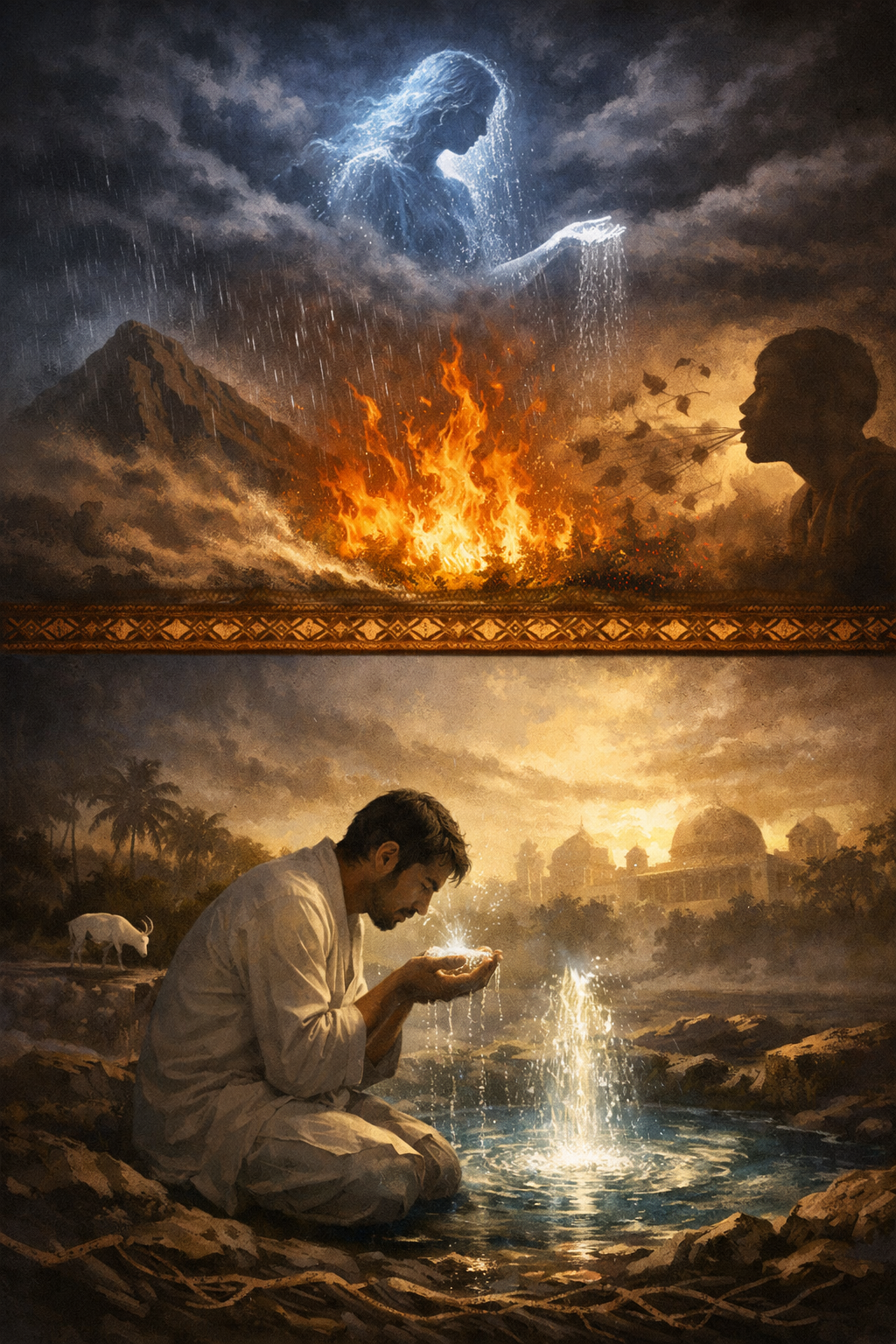
Secondly, Marlina’s “Our Ancestral Land” (2013) explores a different kind of loss—the broken relationship between humans and nature. Marlina paints a picture of a land that once recognized us but now turns away in silence. Trees, rivers, and mountains no longer speak our names. The poem says, “the land gazes at us from its wounded depths,” making us feel the pain of nature.” This poem teaches us that when we forget our traditions, destroy our environment, and chase modern comfort without care, we also lose a part of ourselves. Reading this poem helps us reflect deeply: where did we go wrong, and how can we return to harmony? Poetry like this helps raise environmental awareness and encourages people to protect nature by remembering the wisdom of the past. Writing poems about nature can also be a way to heal both the land and ourselves.
Thirdly, in the poem of “We and the Stone” (2016), Marlina turns poetry into a bold voice of resistance. She compares people’s fight against tyranny to a stone—small, hard, and powerful. Thestone is not just a weapon, but a symbol. Thrown by trembling hands, it becomes a cry for justice. This poem reminds us that even the weakest can be strong if they unite. “We are the stone,” the poem repeats, giving power and courage to all who read it. It tells us not to remain silent, not to bow down, and to keep fighting for what is right. Reading this kind of poetry lights a fire in our hearts. It helps us see that words can move people, and that a single poem can be louder than a shout. Writing resistance poetry can also help people release anger, stay hopeful, and work for change.
Each of those three poems above shows a different reason why we need poetry in our lives. We need poetry to remember those who are forgotten. We need poetry to reflect on what we’ve lost and how we can return to what matters. We need poetry to resist injustice and awaken courage. Whether you are reading or writing, poetry invites you to see the world through deeper eyes, to feel with a more open heart, and to act with greater purpose.
In the end, poetry is not just about beauty—it is about truth. And truth, when spoken with heart, has the power to heal, to connect, and to change the world.
Padang, West Sumatra, Indonesia, 2025
Short Biography of the Writer:
References:
Marlina, L. (2014). “We Shall Endure”. Suara Anak Negeri News. Accessed from https://suaraanaknegerinews.com/we-shall-endure-a-poetry-collection-by-leni-marlina-ppipm-indonesia-poetry-pen-international-community-indonesian-writer-of-satu-pena-indonesian-creator-of-ai-era-fsm-acc-shila/
Fitst Online Publication in Digital Platform: March 27th, 2025. Accessed on
April 2025.
Marlina, L. (2013). “Our Ancestral Land”. Suara Anak Negeri News. Accessed from https://suaraanaknegerinews.com/our-ancestral-land-poems-collection-by-leni-marlina-ppipm-indonesia-poetry-pen-ic-indonesian-writer-of-satu-pena-indonesian-creator-of-ai-era-fsm-acc-shila/
First Online Publication in Digital Platform: March 26th, 2025. Accessed on April 2025.
Marlina, L. (2016). “We and the Stone”. Suara Anak Negeri News. Accessed from https://suaraanaknegerinews.com/we-and-the-stone-the-poems-collection-by-leni-marlina-ppipm-indonesia-poetry-pen-ic-indonesian-writer-of-satu-pena-indonesian-creator-of-ai-era-fsm-acc-shila/
First Online Publication in Digital Platform: March 22th, 2025. Accessed on April 2025.
———————————–

About Husnul Khatimah:
Husnul Khatimah is an undergraduate student at English Languange and Literature Department, Faculty of Languages and Arts, Universitas Negeri Padang. She was born in Bukittinggi, West Sumatra in 2005, and she is currently living in Padang, West Sumatra. Arlita is an alumna of SMK S Pembina Bangsa Bukittinggi, West Sumatra.
In addition, Husnul is an active member of several communities, including PPIPM-Indonesia (Poetry Community of Indonesian Society’s Inspiration), Poetry-Pen International Community (PPIC), Littalk-C (Literary Talk Community), and EL4C (English Language Learning, Literary, and Literacy Community).
The piece by Husnul above was presented virtually at the Poetry Book Launching and Discussion (Poetry-BLaD) and the International Online Seminar on Poetry (IOSoP) held on May 31 at the Auditorium of the Faculty of Languages and Arts, Universitas Negeri Padang, held by Media Suaraanaknegerinews.com in collaboration with UNP.
Husnul’s presentation video from the event is publicly accessible via the following official link:https://www.youtube.com/watch?v=QiqLhU5HdOk
Read more:
AKAR DAN PERLAWANAN: Kekuatan Puisi dalam Mengingat, Merefleksikan, dan Melawan