Literary Review on Indian Poet Bhawani Shankar Nial’s Single-autho Poetry Book “An Encounter with Death” (2021)
By Leni Marlina
–
It is tempting, when approaching a title as declarative as On an Encounter with Death, to prepare oneself for either melodrama or morbid indulgence. Yet Bhawani Shankar Nial’s new single-author collection avoids both traps with an assurance that is almost disarming. His poems do not dramatise death so much as treat it as a companionable presence—an interlocutor rather than an adversary. The result is a body of work that feels less like a confrontation with mortality than a long, occasionally digressive conversation with it, conducted in the half-lit rooms of introspection.
Nial’s guiding sensibility is unmistakably humanist, though not in the triumphalist, Enlightenment fashion. His humanism is quieter, more vulnerable: the kind that acknowledges longing, hesitation, prayer, and doubt as legitimate cognitive tools. What seems to interest him most is not death itself but the subtle rearrangements the mind must perform in order to live with its inevitability. This internal recalibration—spiritual, emotional, intellectual—appears repeatedly, sometimes as whispered invocation, sometimes as a deliberate self-correction. Nial’s desire for methexis, that elusive participation in the eternal, arrives less as theological claim than as a private aspiration murmured into the ear of a sympathetic reader.
Formally, the poems meander between free verse and a certain luminous prose-syntax, as if the poet were unwilling to grant rhythm or structure the authority to fix meaning. This stylistic looseness works in his favour. The poems feel as though they are thinking their way forward line by line, resisting closure, allowing contradictions to coexist without resolution. Such hesitations are not weaknesses; they are the collection’s pulse. One feels that Nial is not simply writing about death: he is writing in the presence of it, and the poems bear the marks of that proximity.
The civic undercurrent of the volume is striking. While Nial is often seen as an interior poet, this collection reveals a writer attuned to the fractures of his homeland and the burdens he suspects it has carried for far too long. The poems that gesture toward public suffering do so without adopting the rhetoric of protest or nostalgia. Instead, they operate like elegies stretched across a social landscape, where personal grief blends with communal disquiet. This tonal modesty—mournful, but never melodramatic—allows the spiritual sensibility of the collection to emerge naturally rather than by insistence.
A recurring thread in these poems is the suspicion that another life—quieter, clearer, more just—might exist beyond the one lived. This alternative life is never described with doctrinal certainty; Nial is too cautious for that. Instead, the imagined afterlife appears as a contour, a faint illumination on the edge of vision. Against this backdrop, his treatment of “vain glory” is especially sharp. He critiques ambition not from moral piety but from the knowledge that time is the only real currency we possess, and that it erodes with unnerving efficiency. Nial’s distrust of worldly triumphs is less philosophical position than lived experience, rendered in images of sand falling, disappearing, refusing to be held.
What ultimately distinguishes Nial, however, is his cultural doubleness. The poems draw upon Eastern spiritual traditions and Western intellectual frameworks without forcing them into synthesis. They are allowed to sit beside each other—sometimes harmonising, sometimes merely coexisting. This produces a sense of quiet universality: the feeling that the poet is writing from a vantage point where the roots of disparate cultures overlap, entwine, and occasionally share the same subterranean water.
The power of “An Encounter with Death” lies in its contemplative sprawl, its willingness to dwell in ambiguity, its refusal to simplify what cannot be simplified. In Nial’s hands, death becomes less a conclusion than a lens through which the rest of life is seen more clearly. The pleasure of reading this collection—if “pleasure” is the right word—comes from accompanying a mind that is thinking honestly in the shadow of the inevitable, and finding, in that shadow, something unexpectedly luminous.
(LM, Padang, West Sumatara, Indonesia, 2025)
About the Poet: Dr. Bhawani Shankar Nial

Dr. Bhawani Shankar Nial’s is an internationally acclaimed poet, living in Sriradha, Bhawanipatna, INDIA.
Dr. Bhawani Shankar Nial’s including “LOCKDOWN” poetry book, has been translated into more than 24 international languages. In recognition of his contributions, he was honored as a Global Literary Figure at Kalahandi Utsav Ghumura-2025. His poetry bridges cultures and inspires worldwide.
About Reviewer: Leni Marlina
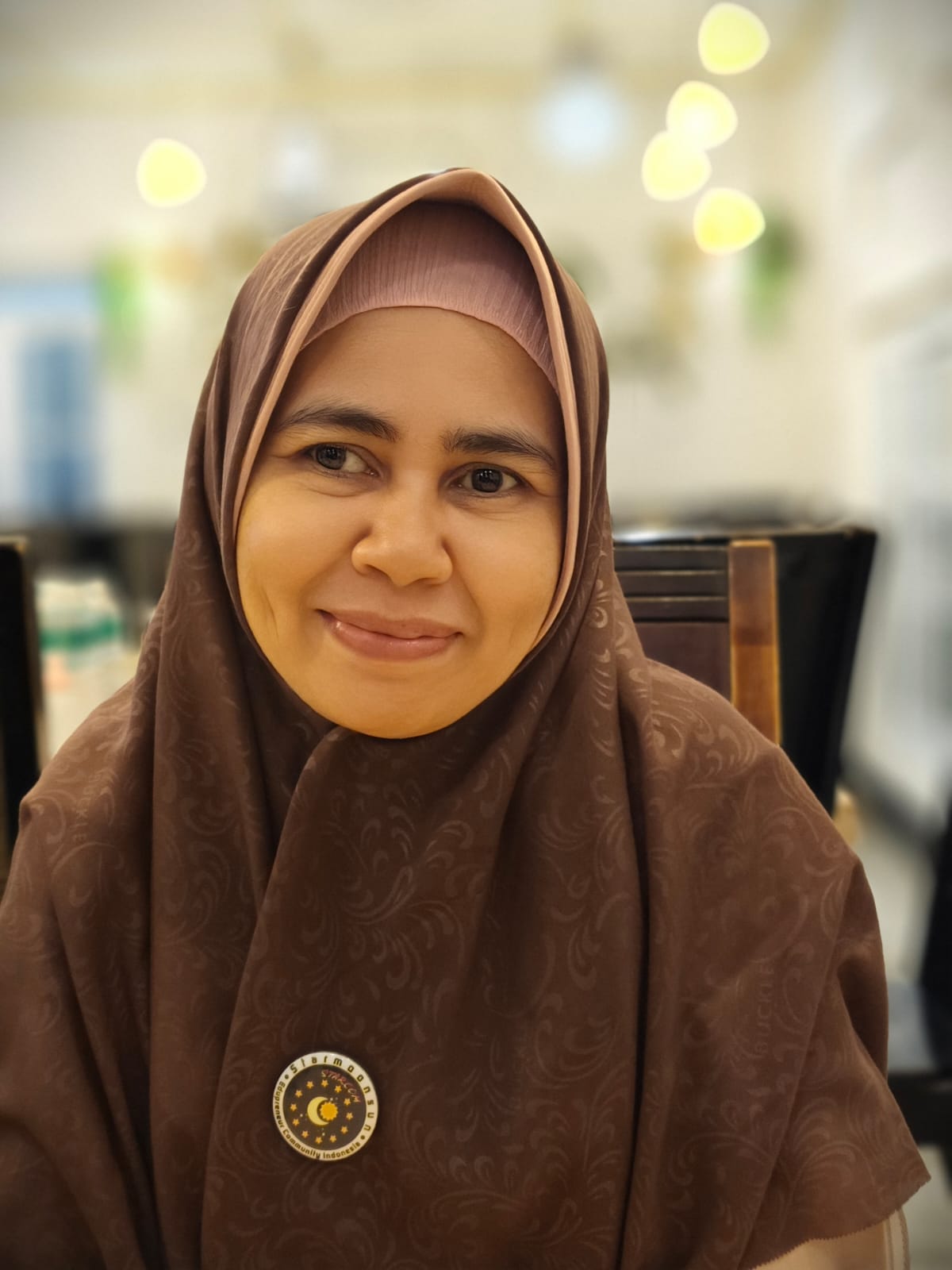
Leni Marlina was born in Baso, Agam, West Sumatra, and currently resides in Padang. She is a poet, author, and lecturer in the English Literature Program at the Faculty of Languages and Arts, Universitas Negeri Padang, where she has served since 2006 with steadfast commitment to literature, pedagogy, and the cultivation of critical imagination.
Having begun her poetic journey in 2000, she has since produced an expansive body of work that captures the intricacies of inner struggle, the quiet depths of contemplative thought, ecological and social urgencies, humanistic meditations, and an abiding yearning for harmony and peace. During her Master’s studies in Writing and Literature in Melbourne (2011–2013), she sustained an unwavering devotion to writing—embracing poetry as a sanctuary of stillness that sharpens awareness, preserves clarity of heart, and guides her toward a more profound apprehension of selfhood and the wider human condition. Since 2024, she has opened her vast “ocean of words” to broader audiences through various digital platforms.
Her recent publications include The Beloved Teachers, L-BEAUMANITY (Love, Beauty, and Humanity), and the English Stories for Literacy trilogy—works that interweave dedication, language, ethical sensibility, and the enduring vitality of the human spirit. In addition to poetry, she writes short fiction, essays, literary criticism, book reviews, and translations of both literary and journalistic texts. Her oeuvre appears across numerous anthologies and digital literary spaces. Beyond her academic responsibilities in the Department of English Language and Literature, she remains deeply involved in national and international literacy networks, and has founded multiple initiatives that respond to the evolving dynamics of literature in the digital age.
As the founder and chair of several social, literary, and digital-literacy movements—including the Pondok Puisi Inspirasi Masyarakat (PPIPM-Indonesia): Indonesian Community of Poetry Readers and Writers, the Poetry-Pen International Community (PPIC), the Literature Talk Community (Littalk-C), and EL4C (English Language Learning, Literature, and Literacy)—she continues to connect diverse generations through literature, nurturing a sustainable culture of reading, writing, dialogue, and reflective inquiry.
In recognition of her sustained contribution to literacy and the literary arts, she was honored with the Best Writer 2025 award from SatuPena West Sumatra at the 3rd International Minangkabau Literary Festival (IMLF-3), as well as the ACC International Literary Prize 2005 from the ACC Shanghai Huiyu International Literary Creative Media Centre.
Please read another review about Dr. Bhawani Shankar Nial’s poem and his achievement in the following official link: