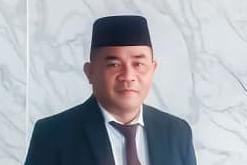
LENI MARLINA AND THE POWER OF WORDS THAT CHALLENGE REASON AND AWAKEN CONSCIENCE
Reviewed by Lasan Silverius Bataona
Translated (Indonesian- English) by
LM Trans- PC (Translation Practice Community)
–
I recently read a poetry review of Leni Marlina’s work, written by Paulus Laratmase. His analysis is thorough and insightful, highlighting two of Marlina’s poems that profoundly challenge the intellect and stir the conscience of any thoughtful reader. Anyone who engages with Leni Marlina’s poetry will feel the immense power of her words that provoke, inspire, and awaken both reason and moral awareness.
“There is a voice they believe to be dead, but it only hides within the whispers of the wind, slipping through the cracks of the sea, becoming the breath that gives life to the waves…
There is a resistance they think has been extinguished, but it is only learning from the embers, igniting beneath the ashes, waiting for the moment to burn down a flawed history…” (Excerpt from Leni Marlina’s poem “The Voice That Cannot Be Erased”).
In reading her work, one cannot help but recall the legacies of Chairil Anwar and WS Rendra—poets whose words have similarly sparked thought and emotion. Like them, Leni Marlina does not lead protests or armed uprisings; instead, she wields the most powerful weapon: words. Napoleon Bonaparte once admitted he feared the pen of a single journalist with more than a thousand enemy soldiers.
This is why WS Rendra was banned by Indonesia’s New Order regime from public poetry readings, and why Wiji Tukul, a poet and activist, disappeared amid political repression during the reform era. Because words, especially those spoken by poets and writers—hold the power to inspire masses, to ignite resistance against oppression, and to expose greed, corruption, and injustice.
History shows us the potency of words through great leaders. Germany had Adolf Hitler, whose speeches rallied crowds; Indonesia had Ir. Soekarno, who mobilized thousands through his oratory alone. In Timor Leste, Mgr. Carlos Filipe Ximenes Belo transformed his nation’s fate from colonized to independent—not through weapons, but through words.
In this respect, Leni Marlina’s activism through poetry resembles that of Mgr. Belo. Both serve as the “voice of the voiceless.” The success of such struggles is evident in places like Timor Leste. What about other regions like Papua or Aceh? Through her poem “The Voice That Cannot Be Erased,” Marlina affirms the natural and inevitable progress of these efforts, and the good they will ultimately bring.
The outcomes of noble struggles to turn darkness into light may not be immediately measurable or predictable, but they unfold naturally over time. As Leni Marlina writes, “The ember beneath the ash will ignite in time to burn away the false history.”
“The hand thought to be broken is only folded, becoming roots that spread and are ready to tear through the earth.”
The whole poems can be accessed by the public via the official link below: https://suaraanaknegerinews.com/voices-that-cannot-be-erased-the-special-poetry-collection-by-leni-marlina-ppipm-indonesia-poetry-pen-ic-indonesian-writer-of-satu-pena-indonesian-creator-of-ai-era-fsm-indonesian-literacy-2/
Read more: