The Confession of an Angel: An Existential Reading of Humanity After the Loss of Peace in Martha Vaskantira’s Anti-War Poem

By: Rizal Tanjung
–
When Poetry Becomes Moral Testimony
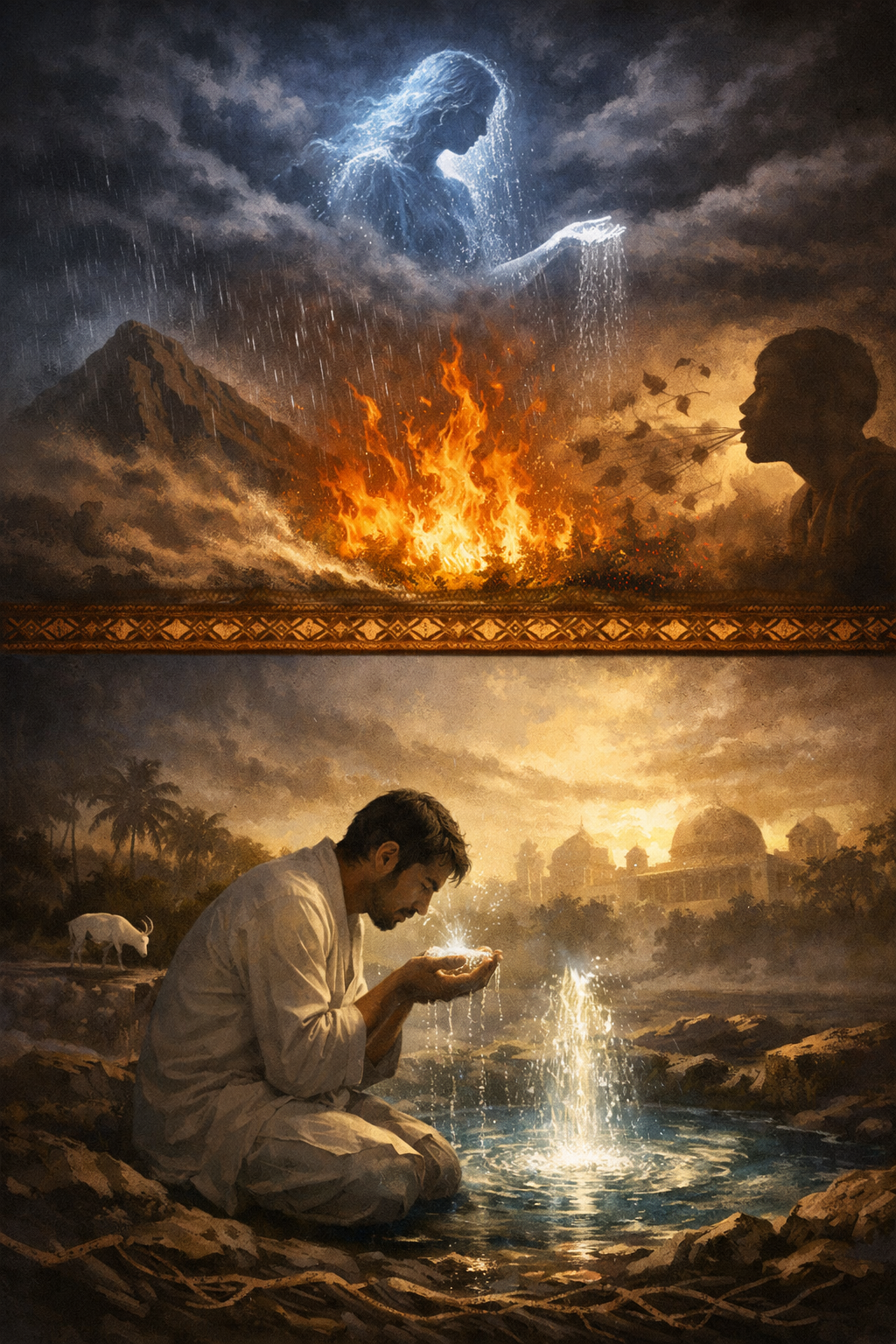
The Confession of an Angel by Martha Vaskantira is not merely a poem; it is a moral document, a metaphysical lament, and a silent tribunal against modern civilization. It speaks not to entertain, but to accuse; not to soothe, but to awaken. This poem stands at the intersection of poetry, philosophy, and ethical witness, where language is forced to confront the unbearable weight of human cruelty.
From its opening line, the poem abandons comfort and enters the terrain of existential rupture:
“Black birds unfold their cries.”
These birds are not simply omens of death. In existential philosophy, a cry is the final form of language when meaning collapses. The black birds embody a world that no longer speaks in reason, but in screams. Civilization has lost its grammar; what remains is sound raw, brutal, irreversible.
—
A Dawn Without Light: The Collapse of Hope
“An omen of desolation and death
in a place where dawn always rises dark.”
Dawn, traditionally a symbol of renewal, is rendered meaningless here. This is not a poetic exaggeration but an ontological statement: time itself has lost its promise. Morning no longer redeems the night. The future no longer corrects the past.
In philosophical terms, this is the condition of a world that has lost its teleology, its sense of purpose. Humanity wakes up, but no longer moves forward. Existence continues, yet meaning does not.
—
Bare Hands Washing Death: Innocence Forced Into Complicity
“Bare hands wash death in the river.
So white, so innocent…”
This image carries unbearable ethical tension. Bare hands signify vulnerability, poverty, and purity. These hands do not kill yet they are forced to cleanse the aftermath of killing. Innocence is no longer protected; it is conscripted.
Here, Vaskantira exposes a profound moral inversion: those least responsible for violence are made to carry its weight. Children, mothers, the powerless, these are the ones left to touch death directly.
In Levinasian philosophy, the face of the innocent demands infinite responsibility. Yet in this poem, responsibility has been grotesquely misplaced.
—
Dead Angels in the Water: The Collapse of the Sacred
“They bend to kiss
the dead bodies of Angels
adorning the water.”
Angels here are not celestial beings. They are children, civilians, the unnamed pure. Their bodies “adorn” the river not by beauty, but by abundance—death has become decoration.
This is the ultimate desecration: the sacred is no longer protected; it is displayed. When angels float lifeless in rivers, the metaphysical order of the world has inverted. Heaven no longer watches over earth. Earth consumes heaven.
—
War as a River Flowing Into Hell
“Wars pour out
into the seas of the silver sphere.”
War is not an event; it is a system. It flows endlessly, like a polluted river seeking its natural destination.
“A tearful journey
to the delta of hell.”
Hell is not elsewhere. It is the final form of human organization when violence becomes normalized. As Hannah Arendt warned, evil reaches its most terrifying form when it becomes banal, when it flows without resistance.
—
The Mother: The World That Has Lost Its Future
“The mother stands in the rain,
holding the flower of Spring
that was cut too early.”
The mother in this poem is not only a person—she is the world itself. The child is the future. When the child is killed, the future is amputated.
The flower of Spring cut too early is time violated. It is potential murdered before becoming history.
“Her eyes, black oceans
in which the world has sunk.”
Grief here is no longer emotional; it is cosmological. The world does not merely reflect in her eyes it drowns in them.
—
The Three-Year-Old Child: Wisdom Born Too Soon
“Her three-year-old boy,
wise from pain
and the curse of his people,
touched eternity.”
This is one of the most devastating lines in modern anti-war poetry. Wisdom should come from living, not from suffering unto death. When a child becomes “wise from pain,” humanity has failed at the most fundamental level.
To “touch eternity” should be a spiritual fulfillment. Here, it is an accusation: eternity is reached because life was denied.
—
The Final Sentence: A Theology That Shatters Heaven
“Mama, when I go up there,
I will tell God everything.”
This is not a child’s innocent promise. It is the final indictment of history. The witness is pure. The testimony is uncontestable.
God is no longer the judge. The child is.
“The miracle bent.”
The miracle does not disappear it collapses under the weight of human violence. Not because divinity is weak, but because humanity has made salvation morally unbearable.
—
Poetry as a Wounded Prayer
Martha Vaskantira’s poem is a wounded prayer, an existential scream, and a philosophical mirror held before humanity’s broken face. It tells us that peace is not a slogan, but an ethical obligation.
As long as children must promise to “tell God everything,”
as long as mothers stand in rain holding futures that will never bloom,
as long as rivers carry angels instead of reflections
humanity has not yet earned its name.
This poem does not ask to be admired.
It asks to be remembered.
And more than that—it asks us to stop washing death with innocent hands.
West Sumatra, Indonesia, 2026.
—–
ΗΟΜΟΛΟΓΙΑ ΕΝΟΣ ΑΓΓΕΛΟΥ
(Ένα αντιπολεμικό ποίημα αφιερωμένο σε όλους τους αγγέλους που χάθηκαν άδοξα).
Μαύρα πουλιά ξεδιπλώνουν τις κραυγές τους.
Προμήνυμα ερημιάς και θανάτου
σ’ έναν τόπο που ξημερώνει πάντα σκοτάδι.
Γυμνά χέρια πλένουν το θάνατο στο ποτάμι.
Τόσο λευκά, τόσο αθώα….
Σαν κρίνοι που άνθισαν
στις όχθες του
κι έσκυψαν να φιλήσουν
τα νεκρά σώματα των Αγγέλων
που στολίζουν τα νερά του.
Εκβάλλουν πολέμους
στις θάλασσες της ασημένιας σφαίρας.
Δακρυσμένο ταξίδι
στο δέλτα της κόλασης.
Γεράκια ανοίγουν τα φτερά τους.
Ο ίσκιος τους έθαψε την αγάπη
στις σπηλιές.
Κατάπιε τα παιδικά χαμόγελα.
Η μάνα στέκεται μες τη βροχή.
Κρατάει το λουλούδι της Άνοιξης
που κόπηκε νωρίς.
Τα μάτια της μαύροι ωκεανοί
που μέσα τους βούλιαξε ο κόσμος.
Το τρίχρονο αγοράκι της
σοφό απ’ τον πόνο
και την κατάρα του λαού του
άγγιξε την αιωνιότητα.
Τα λόγια του άστρα της Βηθλεέμ
που ποτέ δε θα δύσουν.
Κυλούν στα αυτιά της
αργά, βασανιστικά
χαρακώνουν το νου
ξεριζώνουν το σώμα.
Η ψυχή γονατίζει
στο Άγιο βλέμμα τους.
‘’Μαμά όταν θα πάω εκεί ψηλά
θα τα πω όλα στο Θεό’’.
Το θαύμα λύγισε.
Μάρθα Βασκαντήρα