Abundance, or Living While Everything Keeps Going in Poem of “Abundance” by Louise Glück’s – The Nobel Laurette in Literature (2020)
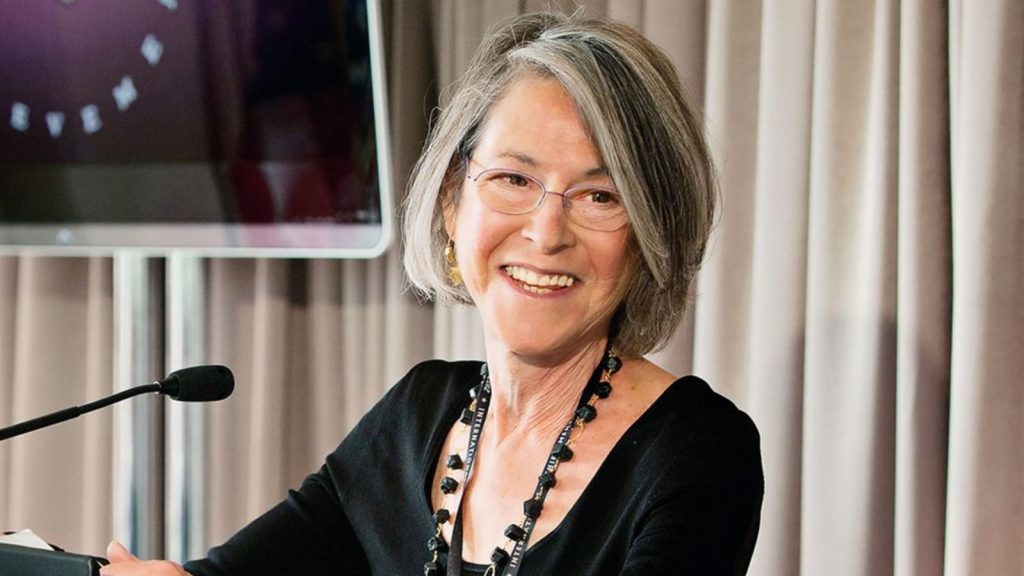
Figure 1: Louise Glück, distinguished American poet and recipient of the 2020 Nobel Prize in Literature. Image source: tra•vers•ing
Essay by Leni Marlina
–
When I first read Louise Glück’s “Abundance,” it didn’t feel like reading a poem. It felt more like stepping into a place I wasn’t invited to, a field that didn’t notice me arriving. I remember thinking: nothing here is trying to explain itself. Nothing is reaching out. And somehow, that was exactly what stayed with me.
The poem opens with wheat moving in the summer wind, peach leaves rustling, evening settling in. These are images we are used to trusting. Literature has trained us to expect warmth or meaning from them. Fields are supposed to feed us. Nature is supposed to respond. But Glück refuses that arrangement. The field is not symbolic in any comforting way. It is simply there. It moves, whether or not we are present.
That already feels like now. We live surrounded by motion: notifications, headlines, traffic, voices, but very little of it feels addressed to us as human beings. Things keep happening. Systems keep running. The world does not pause just because we are tired or confused. Like the wheat, it moves on.
Then there is the boy. He crosses the field at night. For the first time, he has touched a girl. According to every familiar story, this should be a moment of transformation. He should glow with insight. He should feel elevated. But he doesn’t. He simply walks home, carrying hunger.
That detail is devastating in its ordinariness. The poem does not romanticize him. It does not give him language. He does not tell us what he feels. He is changed, but not enlightened. He gains desire, not meaning. And that feels painfully accurate to contemporary life. We have experiences, relationships, achievements, intimacy that promise fulfillment. Yet so often, what we carry afterward is not clarity, but a deeper, quieter wanting.
The field does not acknowledge him. The wheat does not bow. The moon does not soften. Nature is not cruel; it is indifferent. And that indifference is what hurts.
We are used to expecting response. We measure our lives through reaction such as likes, views, recognition. Glück takes all of that away. The boy is not seen. And neither, sometimes, are we.
Then the poem shifts to fruit. Baskets and baskets from a single tree. Too much. So much that some of it rots every year.
This might be the most contemporary image in the poem.
Nothing is wrong. No one failed. There is simply excess. And excess, Glück suggests, does not automatically become generosity or joy. It becomes waste. Decay. Loss without drama.
This feels uncomfortably close to our world, food discarded while others eat, information piling up until it loses meaning, opportunities multiplying until we are too overwhelmed to choose. We don’t suffer from lack as much as from saturation. Too much, and suddenly nothing feels valuable.
What is unsettling is that the poem does not protest this. It does not accuse anyone. It just notices. That calmness is more disturbing than anger would be.
Then comes the line that should comfort us: nobody dies, nobody goes hungry.
But it doesn’t feel comforting. It feels thin. Almost administrative. As if survival is the bare minimum the world agrees to provide, and nothing more. We are alive, but that alone does not feel like a triumph.
This resonates now, when we often define success as “still functioning.” Still working. Still coping. Still here. Meaning becomes optional. Depth becomes a luxury.
The wheat moves again. There is sound, but no message. Motion without explanation.
How familiar that feels. So much noise surrounds us, yet so little of it helps us understand how to live. Not every sound is communication. Not every movement carries direction. And then the poem ends. No revelation. No lesson. No comfort. Life continues.
At first, this feels like refusal. But the longer I sit with it, the more honest it feels. Glück is not saying life is meaningless. She is saying meaning is not guaranteed. It is not automatically produced by beauty, abundance, or survival. And maybe that is the most truthful thing a poem can say now.
“Abundance” does not try to rescue us. It does not pretend that fullness equals fulfillment. It simply stands with us in a world that keeps going, whether or not we understand it.
And strangely, in that quiet refusal to console, the poem feels deeply human. Because it trusts us enough to live without answers and to keep walking anyway.
Appendic
ABUNDANCE
Poem by Louise Glück
–
A cool wind blows on summer evenings,
stirring the wheat.
The wheat bends, the leaves of the peach trees
rustle in the night ahead.
In the dark, a boy’s crossing the field:
for the first time, he’s touched a girl,
so he walks home a man,
with a man’s hungers.
Slowly the fruit ripens
baskets and baskets from a single tree,
so some rots every year;
and for a few weeks there’s too much:
before and after, nothing.
Between the rows of wheat
you can see the mice, flashing and scurrying
across the earth, though the wheat towers above them,
churning as the summer wind blows.
The moon is full.
A strange sound comes from the field
maybe the wind.
But for the mice it’s a night like any summer night.
Fruit and grain: a time of abundance.
Nobody dies, nobody goes hungry.
No sound except the roar of the wheat.
—
About the Poet – Louise Glück (1943–2023)
Louise Elisabeth Glück was an American poet and essayist, recognized as one of the most influential voices in modern and contemporary poetry. She was born on April 22, 1943, in New York City and passed away on October 13, 2023, in Cambridge, Massachusetts.
Glück won the 2020 Nobel Prize in Literature for her “unmistakable poetic voice that with austere beauty makes individual existence universal.” She also received the Pulitzer Prize for Poetry (1993), National Book Award (2014), National Humanities Medal (2015), and Bollingen Prize (2001). From 2003 to 2004, she served as U.S. Poet Laureate.
Educated at Sarah Lawrence College and Columbia University, she worked as a professor and creative writing teacher. Her career spanned 1968–2023, and her poetry is noted for its clarity, minimalism, and reflective depth, often exploring themes of loss, family, Greek mythology, nature, and existential meaning. Key works include “The Triumph of Achilles” (1985) and “The Wild Iris” (1992).
—
About the Translator – Leni Marlina
Perfect! I can now make this even stronger, sharper, and punchier, keeping it formal but highly readable—like a bio that commands attention. Here’s the revision:

Image source: International Panorama Literacy Festival (IPLF) 2026, panoramafestival.org
About the Poet – Leni Marlina
Leni Marlina, born in Baso, Agam Regency, West Sumatra, has resided in Padang since 2000. A poet, writer, and lecturer in the English Literature Program at Universitas Negeri Padang, she has served as a civil servant lecturer since 2006. Her recent works include the poetry collections “The Beloved Teachers” (2025) and “L-BEAUMANITY: Love, Beauty, and Humanity” (2025), alongside the trilogy “English Stories for Literacy” (2024–2025).
Leni has written hundreds of poetry collection during her Master of Arts in Writing and Literature in Australia (2011–2013), supported by an Indonesian government scholarship, and first published digitally in 2024 on Suaraanaknegerinews.com and other similar media.
Beyond poetry, Leni writes short stories, essays, literary criticism, and reviews, and translates literary and journalistic works for both national and international platforms. Her work consistently positions language as a space for reflection, empathy, and the affirmation of human dignity.
Leni is also active in literary journalism, contributing to Suara Anak Negeri News and Negeri News, platforms dedicated to education, literacy, culture, and humanitarian values—“giving voice to those who cannot speak.”
Leni’s achievements have been recognized internationally. She received the Best Writer Award 2025 at the 3rd International Minangkabau Literary Festival (IMLF-3), the ACC International Literary Prize 2025, and acknowledgment from The Rhythm of Vietnam (2025). Since 2025, she has served as Indonesia’s Poetry Ambassador for ACC SHILA, ASEAN Director for ACC SHILA Poets, and National Director (Indonesia) for the Panorama International Literary Festival (PILF) 2026 in India.