POETIC EXPRESSION: Express Your Feelings In a Poetry
Written by Afnand Faiza
Edited by PIPM-Indonesia & Poetry-Pen IC
———————————————-

Expressing your feelings in a poem allows you to pour your emotions into words with depth and beauty. Through poetic devices like metaphor, imagery, and rhythm, you can transform personal experiences—joy, sadness, love, anger—into art that resonates with others. A poem becomes a safe space where your inner thoughts find voice, often saying what spoken words cannot. It’s not just about writing; it’s about releasing what’s inside your heart in a creative, meaningful way. Through three powerful poems by an Indonesian female poet, Leni Marlina—“Calling My Mother’s Name Across The Time” (2004), “The
Bridge That Folds Itself for My Friend” (2017) and “The Words That Cannot Be Spoken” (2017) —we learn why poetry is not only beautiful, but also important for individuals and society. All of the poems have been published at digital platform in 2025 on online media of suaraanaknegerinews.com.
Firstly, in “Calling My Mother’s Name Across Time” (2004) by Leni Marlina is a deeply
emotional and reflective poem about love, memory, and grief. The poet is expressing a deep longing and enduring love for her late mother. Even though her mother is no longer physically present, the poet continues to call her name and pray for her. The poem shows how love for a mother doesn’t disappear with time or death—it transforms into something spiritual and eternal, like a prayer that never stops. The mother’s memory lives on in the poet’s heart and soul. It’s a quiet, powerful tribute to a mothere’s lasting presence in the heart of her child.

Secondly, is “The Bridge That Folds Itself for My Friend” (2017) by Leni Marlina uses the metaphor of a folding bridge to express themes of uncertainty, change, and hope. The folding bridge represents a path or life journey that once seemed stable but has become uncertain or unstable—possibly due to hardship, loss, or emotional struggle. The speaker mentions walking on it while the ground vanishes, symbolizing feelings of insecurity or a loss of direction. Despite this, the speaker turns to their friend with a hopeful wish: that their friend finds a clearer, more reliable path—one that leads to dreams becoming reality. This poem is gentle but aching—full of tenderness, instability, and quiet strength. It’s about losing your own footing while still wishing solid ground for someone else.
Thirdly, in the poem of “The Words That Cannot Be Spoken” (2017) by Leni Marlina explores the pain and longing of unexpressed feelings—especially those that are too deep, emotional, or difficult to say aloud. The poet wants to express something very important, perhaps love, grief, or a deep truth, but every time they try, the moment passes or something stops them—symbolized by “the wind carries it away.” Instead of speaking, they turn to silent prayer, hoping that somehow their feelings will reach the intended person or place where unspoken thoughts are understood and “words become real.” It’s a reflection on emotional restraint, vulnerability, and the hope that feelings can be felt—even if they are never spoken.
In conclusion, Leni Marlina’s poetry powerfully illustrates how verse can serve as a vessel for memory, emotion, and resistance. Through personal grief, uncertain journeys, and unspoken truths, her work reminds us that poetry is not just an artistic expression—it is a lifeline to our past, a mirror of our present, and a quiet act of resilience. In a world that often silences deep emotion or rushes past reflection, poetry like Marlina’s calls us to pause, remember, and feel. It becomes a form of resistance against forgetting, against indifference, and against the loss of our shared humanity. Poetry, then, is not only beautiful—it is necessary. In the end, poetry is not just about beauty—it is about truth. And truth, when spoken with heart, has the power to heal, to connect, and to change the world.
Padang, West Sumatra, Indonesia, 2025

Short Biography of the Writer:
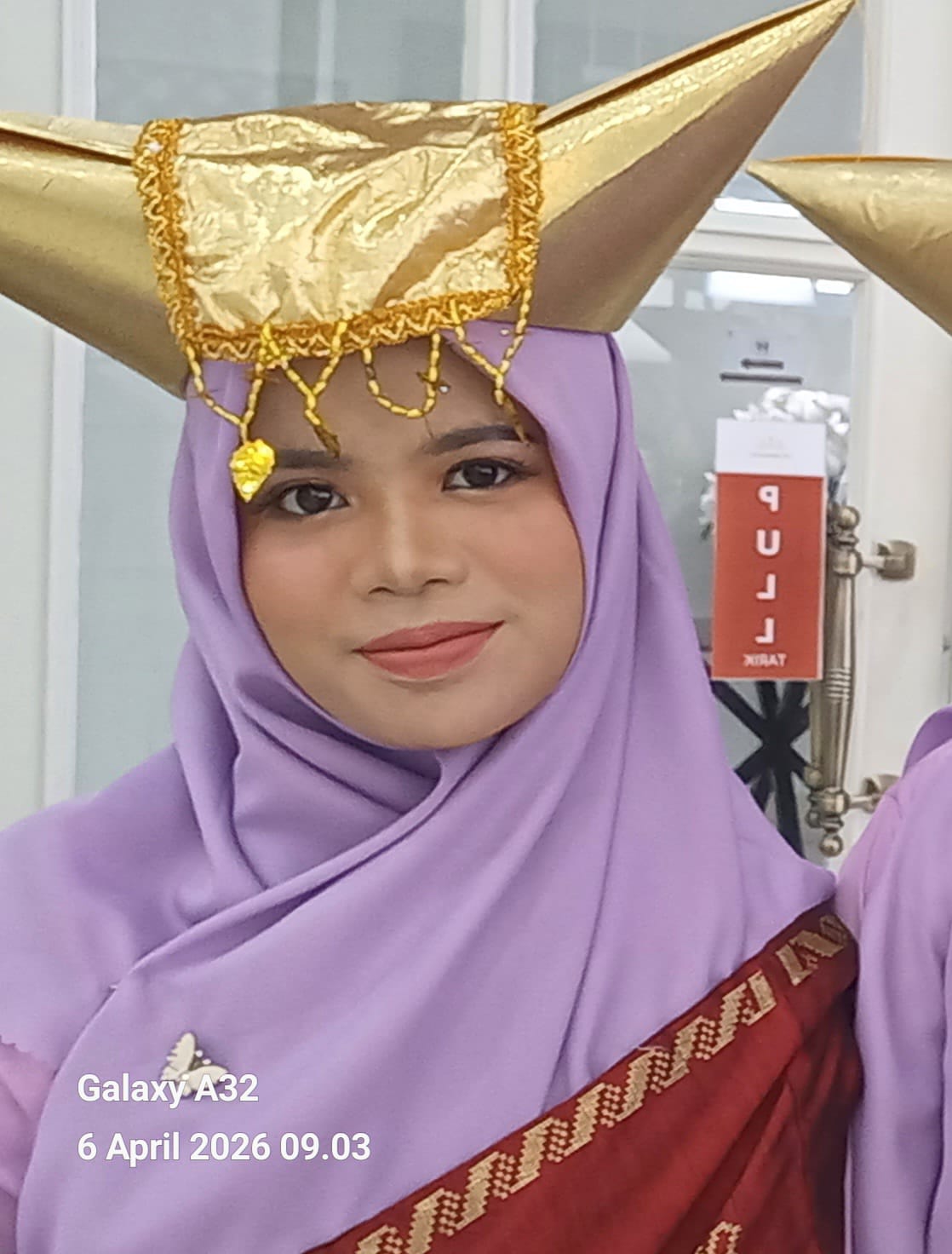
Afnand Faiza is a student who commenced her studies in 2024 at the English Department, Faculty of Languages and Arts, Universitas Negeri Padang, located in West Sumatra, Indonesia. She was born in Bukittinggi on April 28, 2006, and currently resides in Padang, West Sumatra. She is a 2024 graduate of Senior High School 3 Bukittinggi.
In addition, Afnand Faiza is a member of several literary and poetry communities, including PPIPM-Indonesia (Poetry Community of Indonesian Society’s Inspiration), PPIC (Poetry-Pen International Community), Littalk-C (Literary Talk Community), and EL4C (English Language Learning Literary and Literacy Community).
References:
1. Marlina, Leni (2004). “Callings My Mother’s Name Across The Time.” The Selected Poetry Collection in Media suaraanaknegerinews.com. First digital publication: February 15, 2025. [Accessed April 2025]
Link:
2. Marlina, Leni (2017). “The Bridge That Folds Itself for My Friend.” The Selected Poetry Collection in Media suaraanaknegerinews.com. First digital publication: February 11, 2025. [Accessed April 2025]
Link:
3. Marlina, Leni (2017). “The Words That Cannot Be Spoken.” The Selected Poetry Collecrtion in Media suaraanaknegeri.com. First digital publication: February 11, 2025. [Accessed April 2025]
Link:
The piece by Faiza above was presented virtually at the Poetry Book Launching and Discussion (Poetry-BLaD) and the International Online Seminar on Poetry (IOSoP) held on May 31 at the Auditorium of the Faculty of Languages and Arts, Universitas Negeri Padang, held by Media Suaraanaknegerinews.com in collaboration with UNP.
Faiza’s presentation video from the event is publicly accessible via the following official link: